

-
Research Article
- Experimental Investigation and Kinetic Modeling of the Supercritical Pyrolysis of JP-8 Aviation Fuel
- Seung Mook Park, Jun Su Kang, Hyung Ju Lee, Bo Yeon Kim, Inyoung Yang
- An experimental study was conducted to investigate the pyrolysis characteristics of hydrocarbon aviation fuels and to develop global thermal cracking reaction models …
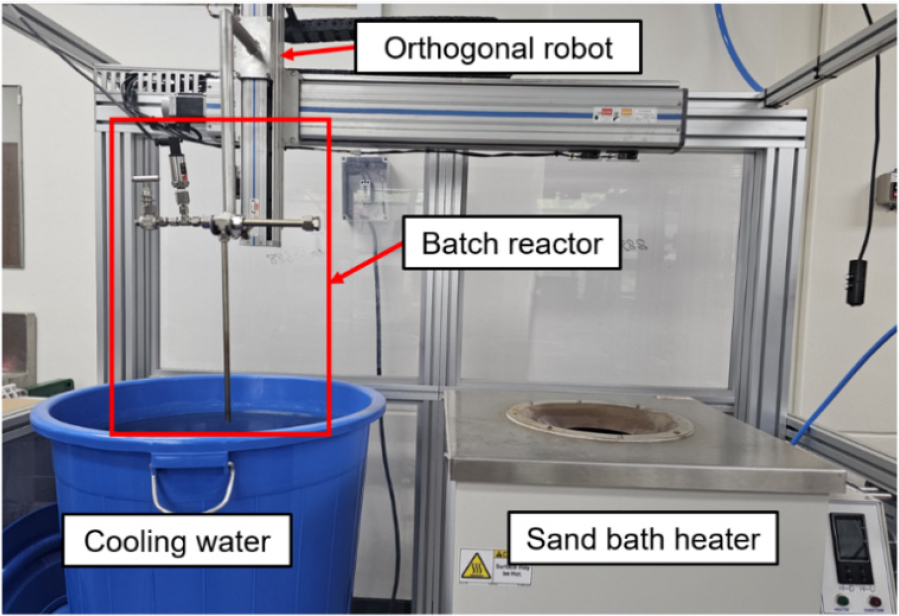
- An experimental study was conducted to investigate the pyrolysis characteristics of hydrocarbon aviation fuels and to develop global thermal cracking reaction models using a batch reactor setup. The endothermic pyrolysis of JP-8, a representative kerosene-based aviation fuel, was examined at 3 MPa and 525-625°C, with residence times ranging from 100 to 220 s. Maximum fuel conversion reached ~76%, with a gas yield of ~37%. Major gaseous products included H2, CH4, C2H4, C2H6, C3H6, and C3H8, whose mass fractions generally increased with conversion. Liquid products, comprising over 100 compounds, were analyzed according to their parent molecular structures, revealing a shift from linear paraffin dominance at low conversion to increased aromatic content at higher conversion. GC-MS analysis yielded an average chemical formula of C11.04H21.70 for JP-8, which guided the development of a surrogate fuel and a global one-step pyrolysis model under the PPD (Proportional Product Distribution) assumption for conversions below 30%. CFD simulations applying the model to a regenerative-cooled channel accurately predicted product distributions, with most predictions within ±20% of experimental values. The results provide key insights into JP-8 pyrolysis under supercritical conditions and demonstrate the model’s applicability for predicting fuel flow and decomposition behavior in regenerative-cooled channels, supporting the design and analysis of regenerative cooling systems for hypersonic vehicles. - COLLAPSE
-
Research Article
- A Preliminary Design Approach to Solid Propellant Formulations for Variable-Thrust Rocket Motors Using CEA Code
- Byoung Sun Min, Sung June Kim, Jae Min Jung
- Pintle-driven thrust modulation in solid rocket motors imposes strict constraints on propellant flame temperature, pressure sensitivity and manufacturability. Conventional HTPB (Hydroxyl-Terminated Polybutadiene)/AP …
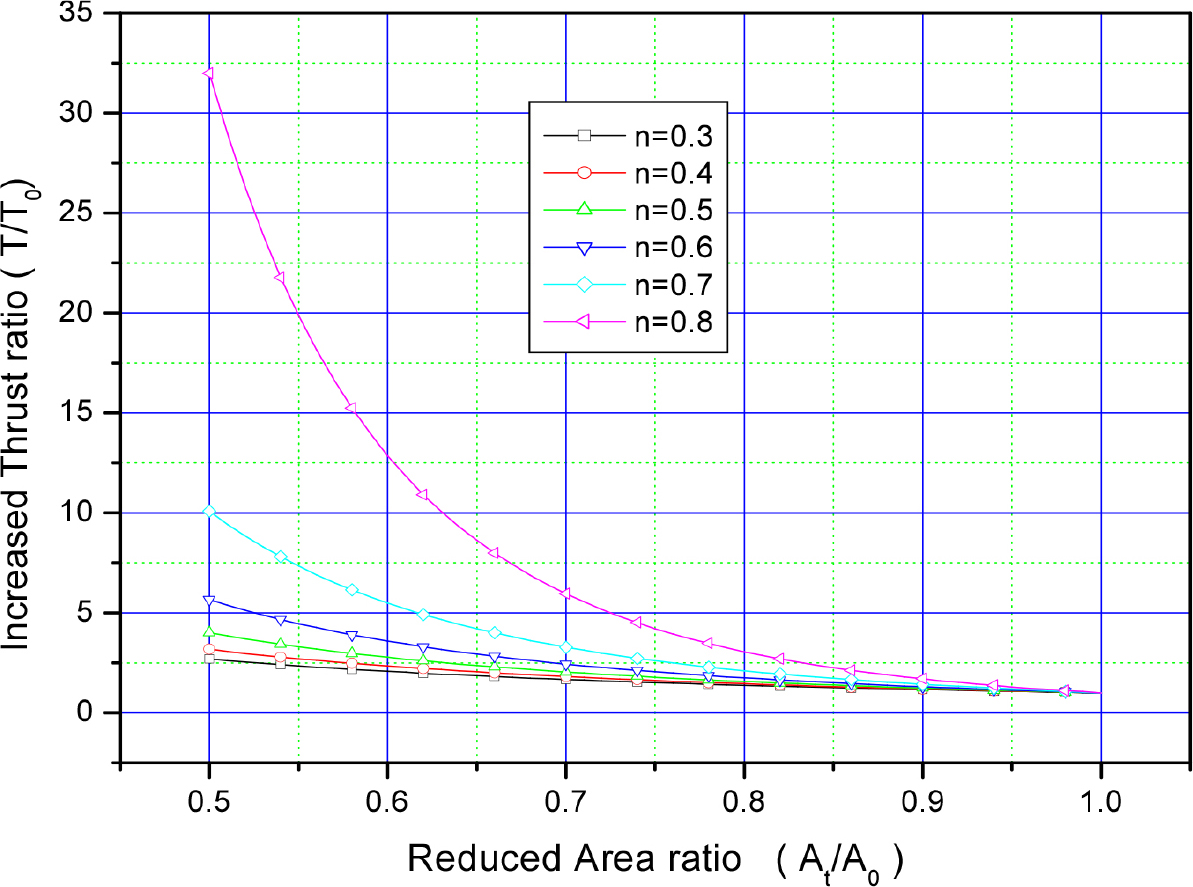
- Pintle-driven thrust modulation in solid rocket motors imposes strict constraints on propellant flame temperature, pressure sensitivity and manufacturability. Conventional HTPB (Hydroxyl-Terminated Polybutadiene)/AP (Ammonium Perchlorate) composite propellants are widely used but offer limited flexibility when these competing constraints must be balanced. In this work, a preliminary formulation methodology based on the NASA CEA (Chemical Equilibrium with Application) code is employed to systematically investigate NEPE (Nitrate Ester Plasticized Polyether) propellants for variable-thrust applications. HTPB/AP propellants are first analyzed as a baseline to clarify the respective roles of AP and nitramine additives on flame temperature behavior. The results show that flame temperature is dominated by AP content, while excessive nitramine loading may impose unfavorable thermal and operational penalties for pintle-driven hardware. Subsequently, NEPE propellant formulated with inert polymer binders are examined, revealing a restricted compositional design due to coupled constraints on oxidizer loading and flame temperature. In contrast, GAP (Glycidyl Azide Polymer) -based propellants provide a significantly expanded formulation window, enabling improved trade-offs among energetic performance, thermal management, and processability. Overall, the present study demonstrates the effectiveness of a CEA-based approach for preliminary screening and down-selection of propellant formulation prior to experimental development. - COLLAPSE
-
Research Article
- Quantitative Evaluation of Bosch-DRIE-Induced Scalloping Effects on the Thrust Performance of Axisymmetric Micronozzles
- Giwon La, Jini Yang, Jongkwang Lee
- This study quantifies the effect of Bosch-DRIE-induced scalloping on the thrust performance of axisymmetric micronozzles fabricated by DRIE. Numerical simulations showed that, …
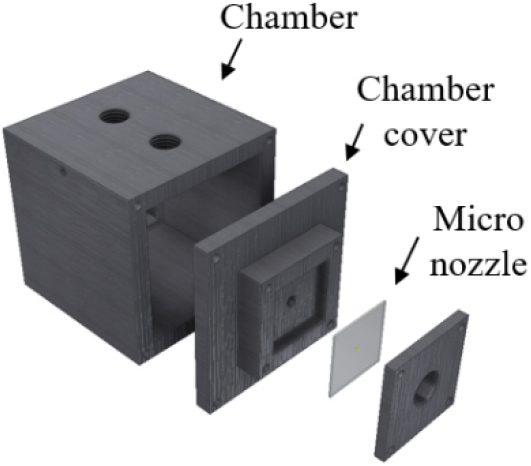
- This study quantifies the effect of Bosch-DRIE-induced scalloping on the thrust performance of axisymmetric micronozzles fabricated by DRIE. Numerical simulations showed that, for a throat diameter of 400 µm, thrust variation remained within 1% when the relative roughness parameter δ was ≤ 2.0%. For smaller throat diameters, the numerical results similarly showed that the effect of relative roughness on thrust remained below 1% within the investigated range. Micronozzles designed for target thrust levels of 50 mN and 100 mN (with throat diameters of 250 µm and 350 µm) were fabricated and experimentally tested. The measured relative roughness was approximately 0.5%, well below the range associated with noticeable thrust variation. Experimental results indicated that the observed thrust change was more closely related to the increase in throat diameter (0.8-0.9%) caused by wet etching than to scalloping itself. Overall, these findings provide practical guidance for establishing fabrication tolerances in the design of MEMS-based micronozzles. - COLLAPSE
-
Research Article
- Experimental Measurement of Thermophysical Properties of Supercritical Fluids
- Seo Yeon Kang, Tae Jong Choi, Seok Pil Jang
- This paper presents the validation of experimentally developed systems and established measurement methodologies for determining the supercritical thermophysical properties of fuels. Experimental …
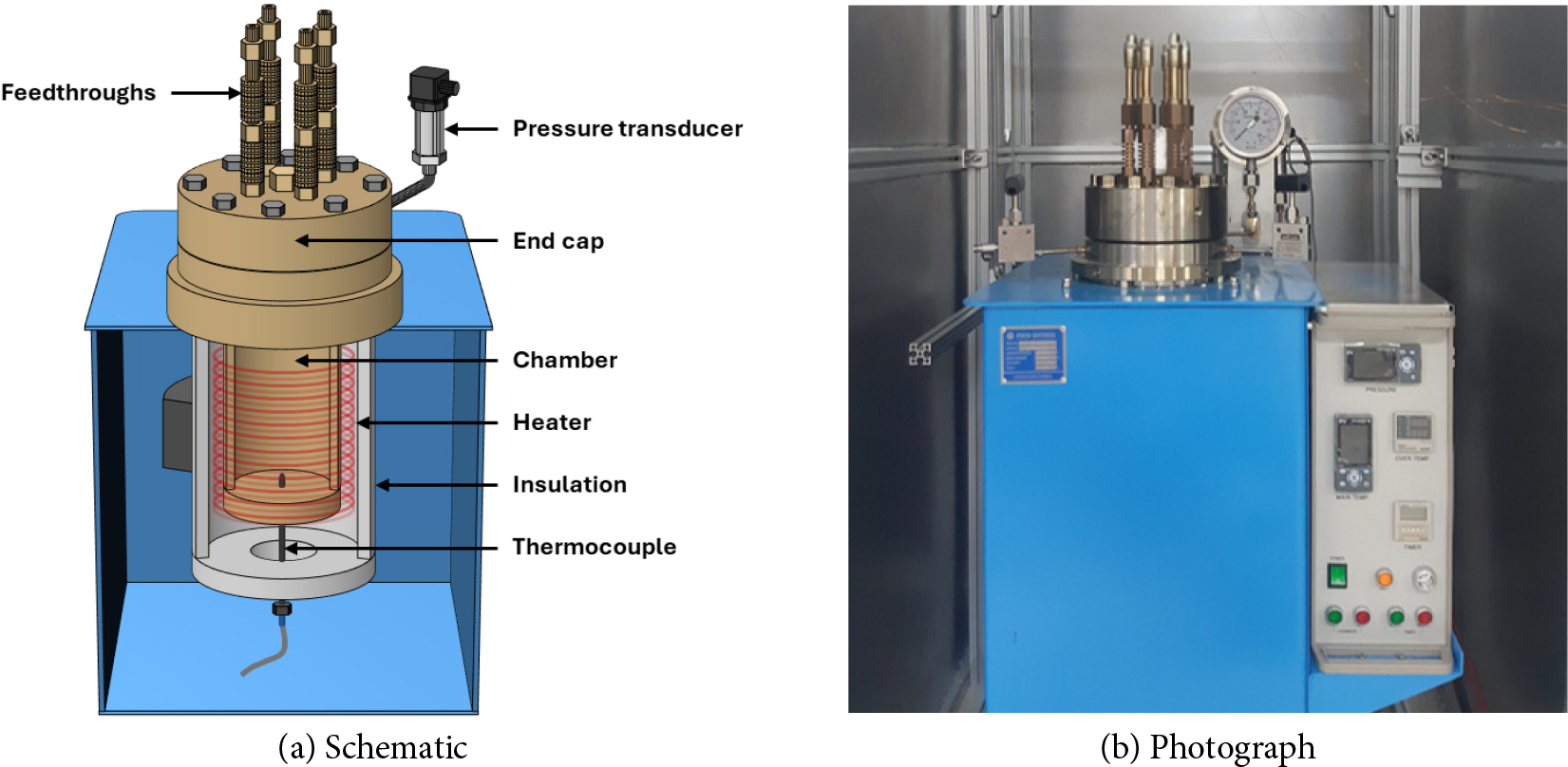
- This paper presents the validation of experimentally developed systems and established measurement methodologies for determining the supercritical thermophysical properties of fuels. Experimental systems were developed to measure density, viscosity, and thermal conductivity under supercritical conditions using the constant-volume method, a capillary viscometer, and the transient hot wire method, respectively, within a specialized high-pressure and high-temperature chamber. An uncertainty analysis was conducted for each measurement system. The reliability of the developed systems was validated through experiments performed over a wide range of temperatures and pressures using DI-water and carbon dioxide. The measured density, viscosity, and thermal conductivity showed excellent agreement with reference data from the NIST Chemistry WebBook within uncertainty ranges of ±5.44%, ±7.45%, and ±9.25%, respectively. These results can be applied to the measurement of supercritical thermophysical properties of fuels used for regenerative cooling in high-speed propulsion systems. - COLLAPSE
-
Research Article
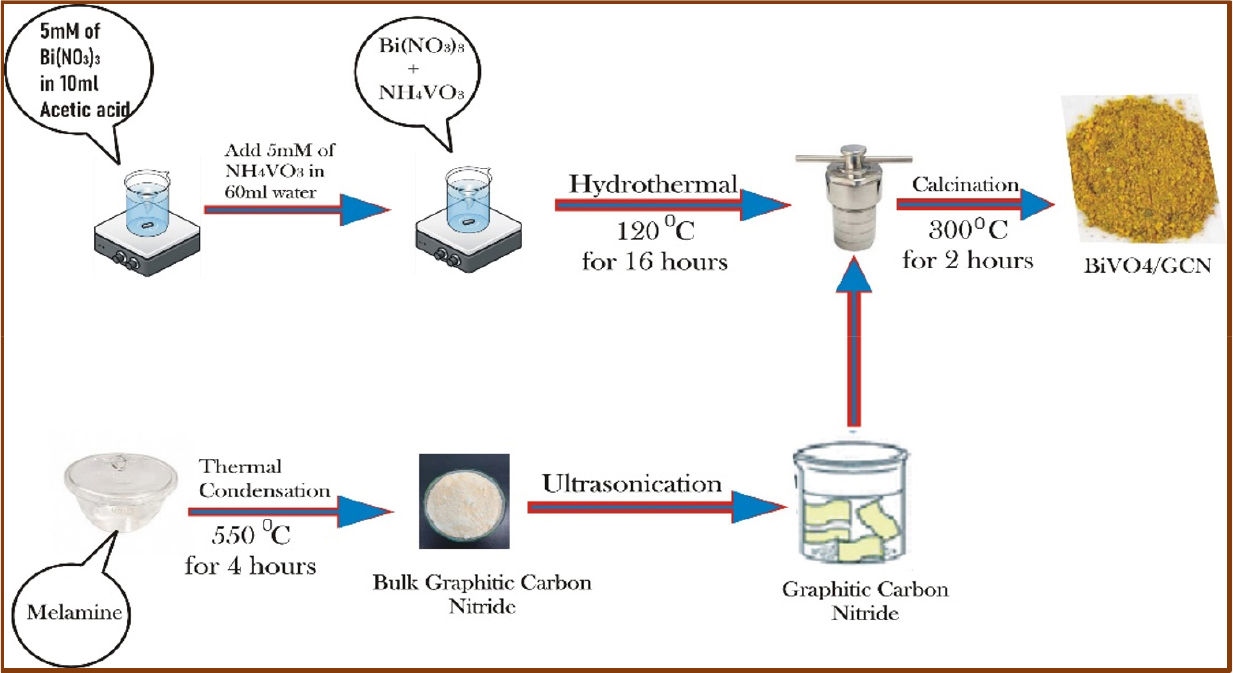
- Development of BiVO4/g-C3N4 Nanocomposite for Enhanced Photocatalytic Degradation of Methylene Blue under Solar Irradiation
- Baby Sri Pratha Govindaraj, Kishore Pothilingam, Jeyanthinath Mayandi, Sivaprakash Paramasivam, Ikhyun Kim
- Due to the increasing population growth, urbanization, and industrial expansion, the demand for water-intensive sectors like the textile, cosmetics, and food industries …
- Due to the increasing population growth, urbanization, and industrial expansion, the demand for water-intensive sectors like the textile, cosmetics, and food industries has made water pollution a global issue. To address this issue, the development of new materials and greener methods is essential. Nanocomposites have the potential to increase solar conversion, improve solar energy efficiency, and reduce wastewater pollutants. Herein, a nanocomposite-based heterojunction of BiVO4, GCN (g-C3N4) and BiVO4/GCN nanocomposite was prepared by the hydrothermal method. The as-synthesized pure BiVO4 and BiVO4/GCN nanocomposite were found to possess a monoclinic phase without any impurities, which is confirmed by Powder XRD (X-Ray Diffraction). The vibrational, morphological, elemental, and optical properties of as-prepared BiVO4/GCN nanocomposite were studied using FTIR (Fourier Transform Infrared Spectroscopy), SEM (Scanning Electron Microscopy), EDAX (Energy Dispersive X-Ray Analysis), and UV-Visible Spectroscopy. The observed data from the aforementioned methodologies indicate that the BiVO4/GCN nanocomposite influences the crystalline nature and electron hole recombination rate, and it also exhibits superior optical quality. Further, the photocatalytic performance was investigated by the degradation of methylene blue dye under sunlight illumination, achieved 97.83%. The BiVO4/GCN nanocomposite exhibits enhanced photocatalytic activity compared with the pristine BiVO4. This showed it to be a promising photocatalyst for organic dye degradation under sunlight irradiation. - COLLAPSE
-
Research Article
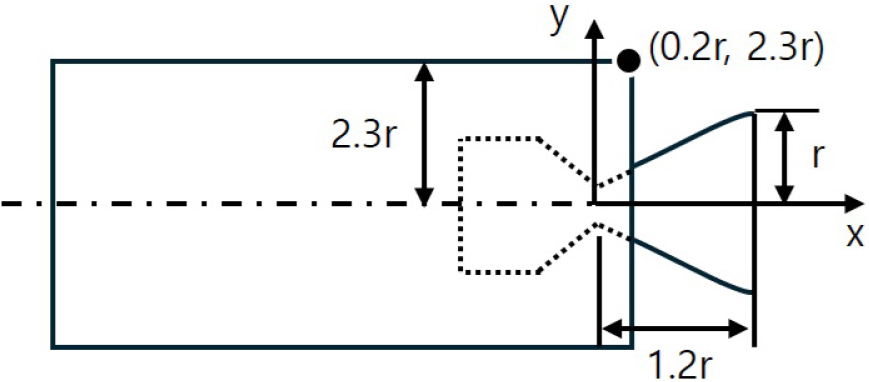
- Numerical Study of Supersonic Retro-Propulsion Flow Characteristics based on Low-Altitude Descending Flight Mach Numbers
- Chae-Hyoung Kim
- This study presents a comprehensive investigation of SRP (Supersonic Retro-Propulsion) flow characteristics of a small launch vehicle equipped with a rocket engine. …
- This study presents a comprehensive investigation of SRP (Supersonic Retro-Propulsion) flow characteristics of a small launch vehicle equipped with a rocket engine. CFD (Computational Fluid Dynamics) simulations were conducted under free-fall conditions to examine the influence of descending flight Mach number and MFR (Mass Flow Ratio) on the flow field surrounding the base rocket body and nozzle. When SRP is applied, the flow behavior is strongly dependent on MFR. At lower MFR values, direct interaction between the bow shock and exhaust plume causes the high-temperature jet to envelop the base body, with wall temperatures exceeding 2000 K. In the intermediate MFR regime (7.8-9.3), the exhaust plume becomes the dominant factor, while Mach disk formation promotes turbulence and heating within the plume wake, leading to reduced wall temperatures on the base body. For MFR values exceeding 10, the flow undergoes a transition from SPM (Short Penetration Mode) to LPM (Long Penetration Mode). This LPM is characterized by an elongated exhaust jet, a weak downstream bow shock, and extensive recirculation zones. Overall, the results demonstrate that low MFR values induce strong plume-shock interactions and high thermal loads on the rocket body, whereas higher MFR values shift the flow dominance to the exhaust plume, mitigating heating effects. - COLLAPSE
-
Research Article
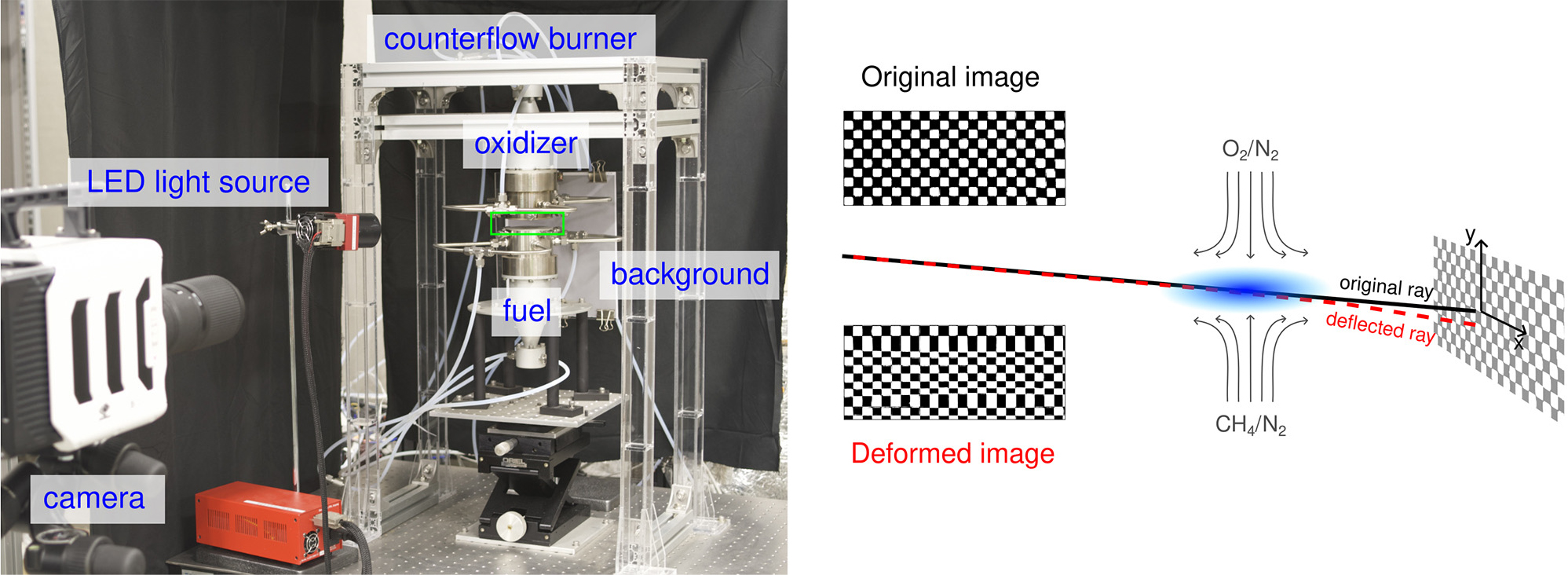
- Application of Background-Oriented Schlieren to Counterflow Diffusion Flames for Refractive Index Gradient Identification
- Daeyoung Jun, Jungmu Hur, Seo Hee Cho, Bok Jik Lee
- BOS (Background-Oriented Schlieren) is an optical diagnostic technique for measuring refractive index gradients associated with density variations. In this study, BOS was …
- BOS (Background-Oriented Schlieren) is an optical diagnostic technique for measuring refractive index gradients associated with density variations. In this study, BOS was applied to a counterflow diffusion flame to quantify refractive index gradients. The displacement field was extracted using a Fourier transform-based demodulation method and converted into refractive index gradients, followed by an inverse Abel transformation. The reconstructed refractive index gradient profiles agree well with one-dimensional numerical solutions in both shape and peak location. The results reveal a distinct double-peak structure in the refractive index gradient, arising from density variations induced by mixing and heating. The peak-to-peak distance obtained from BOS agrees well with one-dimensional solutions across varying strain rates controlled by the nozzle spacing, demonstrating its capability to capture the thermal expansion zone and its thickness. - COLLAPSE

Journal Informaiton
 Journal of Propulsion and Energy
Journal of Propulsion and Energy







 The Korean Society of Propulsion Engineers
한국추진공학회
Room 502, The Korean Society of Propulsion Engineers, 28, Daehak-ro, Yuseong-gu, Daejeon, Republic of Korea
Tel: 82-42-822-6472 / Fax: 82-42-822-6472 / E-mail: kspe@kspe.org Copyright© The Korean Society of Propulsion Engineers. Powered by APUB
Tel: 82-42-822-6472 / Fax: 82-42-822-6472 / E-mail: kspe@kspe.org Copyright© The Korean Society of Propulsion Engineers. Powered by APUB