


1. Introduction
2. Experimental Section
2.1 Preparation of GCN
2.2 Synthesis of BiVO4/GCN Nanocomposite
2.3 Photocatalytic Performance
3. Results and Discussion
3.1 X-Ray Diffraction Analysis
3.2 Fourier Transform Infra-red Spectroscopy Analysis
3.3 Scanning Electron Microscopy Analysis
3.4 Optical Analysis
3.5 Photocatalytic Analysis
4. Conclusion
1. Introduction
Water pollution is one of the biggest problems arising nowadays due to the human population and the lack of clean drinking water [1]. Dye industries and other industrial activities pollute most drinking water sources. In recent years, the usage of synthetic dyes in industries has significantly increased, creating a substantial amount of dye effluents mixed with the water bodies [2,3]. These effluents from the textile, leather, pigment, and cosmetic industries pose serious risks to human health [4,5,6]. These dyes are organic molecules that are chemically stable [7] and can persist in the environment for a long time, making them potentially hazardous [8,9]. Methylene Blue [10,11,12], Methyl Orange [13], Crystal Violet [14], and Rhodamine B [15], Rhodamine 6G [16] are commonly used industrial dyes in printing, textiles, and food processing, and they are important contributors to water pollution. Therefore, effective and efficient methods are required to treat contaminated water [17]. Various techniques like oxidation, electrolysis, ozonation, filtration, membrane separation, and photocatalysis are widely used to treat the polluted water in lab scale as well as in industries [18]. Among them, photocatalysis is a promising technique because of its cost-effectiveness, simplicity, and usage of solar energy [19]. BiVO4 (Bismuth Vanadate) is an important n-type semiconductor metal oxide with a narrow band gap of ~2.4 eV, which allows it to absorb visible light and degrade organic pollutants [20]. Although BiVO4 is a promising photocatalyst, its efficiency is limited by the rapid recombination of charge carriers. Due to this drawback, it is often coupled with other photocatalysts to improve its photocatalytic activity [21,22]. GCN has a moderate band gap of around ~2.7 eV, making it a significant metal-free photocatalyst. It has high chemical and thermal stability, remarkable electrical properties, and a multilayer structure that enhances charge separation during photocatalysis [23,24]. Moreover, the similar band gaps of GCN and BiVO4 make them suitable for heterostructure formation, which enhances visible light absorption and improves photocatalytic activity. This synergistic interface facilitates efficient charge separation and minimizes the electron-hole recombination [25]. Bendahhou et al reported that the g-C3N4/Sr5CaTi2Nb8O30 heterojunction photocatalyst for methylene blue degradation under sunlight irradiation. The composite exhibited high photocatalytic performance with a degradation efficiency of 87.61% after five cycles [26]. Wang Min et al demonstrated that about 92.1% of tetracycline was degraded using an Eu3+ doped g-C3N4 /BiVO4 photocatalyst under visible light irradiation [27]. Therefore, the previous studies have shown that g-C3N4 /BiVO4 nanocomposite is considered an effective photocatalyst with enhanced catalytic activity [28,19,30,31].
Hence, this study focuses on the preparation of BiVO4/GCN nanocomposite using a simple hydrothermal method and investigates the structural, morphological, and optical properties through XRD, FT-IR, SEM, and UV-DRS techniques. The photocatalytic studies were performed using methylene blue dye under visible light irradiation. This study presents the addition of GCN to the BiVO4 nanosphere and explains the synergistic effect and facilitates the photocatalytic performance.
2. Experimental Section
2.1 Preparation of GCN
GCN was produced by the thermal polycondensation method. In brief, five grams of melamine acquired from Sigma-Aldrich was finely ground for 15 min without any further purification. The grained melamine was further transferred into a closed quartz crucible and heated to 550°C for 4 hours at a rate of 5°C per min in a muffle furnace. After cooling to room temperature, the yellow product was ground and stored in a container for further characterization and composite preparation.
2.2 Synthesis of BiVO4/GCN Nanocomposite
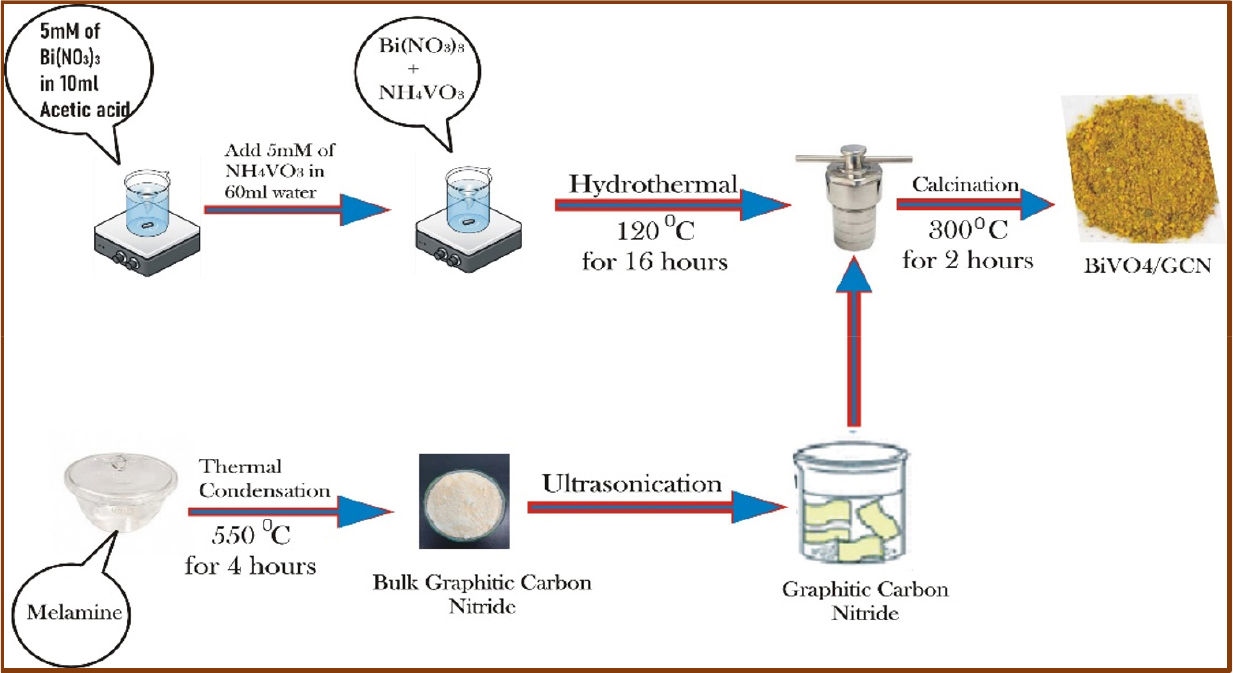
Without additional purification, 5 mM of Bismuth (III) nitrate pentahydrate, obtained from Sigma Aldrich, is dissolved in 10 mL of glacial acetic acid, which is represented as solution A. Additionally, 5 mM of extremely pure ammonium metavanadate, which was acquired from SRL, is mixed in 60 mL of deionized water, which was represented as solution B, and utilized without additional purification. For an hour, Solution A is mixed with Solution B in the same beaker to form a yellowish suspension. The pH of the reaction mixture was adjusted to 9 by the addition of ammonia. Then, the solution was transferred into a 100 mL stainless steel autoclave to treat the reaction mixture under hydrothermal conditions for 16 hours at 120°C. After completion of the reaction, the autoclave was cooled naturally to room temperature. The obtained yellow coloured precipitate was collected, centrifuged, and washed repeatedly with water and ethanol to remove unreacted residues. Then, the sample was dried in a vacuum oven at 80°C for 12 hours. Finally, the sample was calcined at 300°C for two hours to obtain crystalline BiVO4 powder. For the preparation of BiVO4/GCN composite, the same procedure was followed, except that 100 mg of GCN was dispersed in water and added to the hydrothermal reaction mixture and the synthesis procedure mentioned in the Fig. 1.
2.3 Photocatalytic Performance
The photocatalytic degradation performance of the synthesized materials was examined through the degradation of methylene blue dye under visible light solar irradiation. A stock solution was prepared by dissolving 0.31985 g of methylene blue in 500 mL of double-distilled water to obtain a 2 mM solution. In a typical experiment, 10 mg of photocatalyst was mixed with 100 mL of dye solution. The degradation efficiency was calculated using the following Eq. (1):
Where C0 represents the initial concentration of methylene blue before the irradiation process, and C represents the time-dependent concentration of methylene blue upon irradiation [21]. All photocatalytic degradation tests were carried out at Madurai Kamaraj University, Tamil Nadu, India, with 9.9404° N latitude and 78.0105° E longitude in direct sunlight. The intensity of the direct sunlight was measured by using a lux meter.
3. Results and Discussion
3.1 X-Ray Diffraction Analysis
Powder X-ray diffraction analysis was demonstrated to investigate the crystallographic structure and phase purity of the composite material. The X-ray diffraction patterns of BiVO4, GCN, and BiVO4/GCN nanocomposite are shown in Fig. 2. The pure GCN sample exhibits two characteristic peaks at around 13.1 and 27.4, corresponding to (100) plane and (002) planes [32]. The XRD pattern confirms the presence of a monoclinic structure of BiVO4 with no impurities, and it is well matched to the JCPDS file No. 14-0688, indicating that bismuth vanadate was effectively synthesized in a highly crystalline form [33].
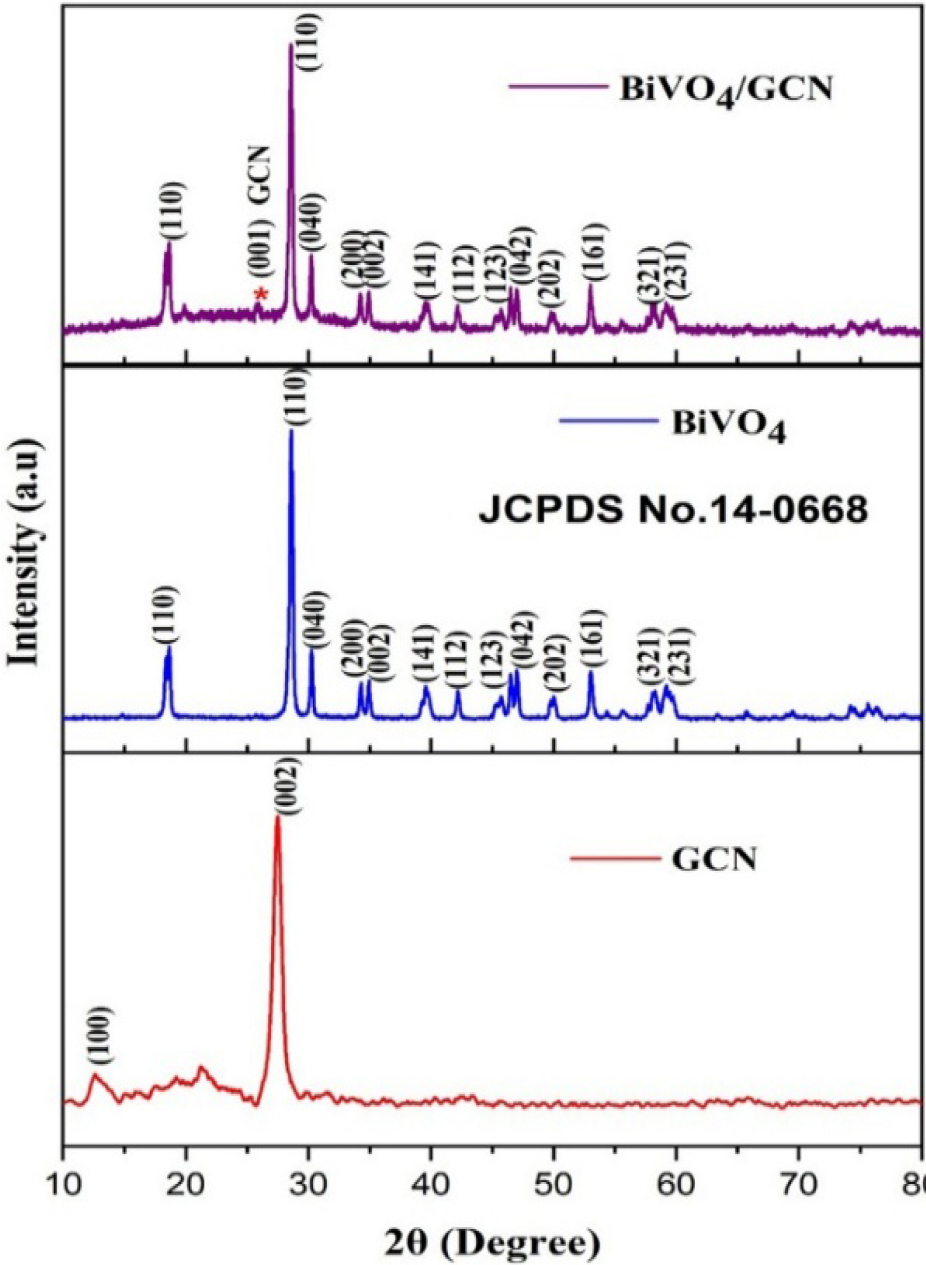
The diffraction peaks of BiVO4 located at 18.7°,28.9°,30.5°, 34.5°, 35.2°, 39.7°,42.5°, 46.7°, 50.3°, 53.3°,58.5°, and 59.3° were well indexed with (110), (040), (200), (002), (141), (112), (123), (042), (202), (161), (321) and (231) planes. In this composite, the characteristic peaks of BiVO4 remained consistent in the composite, suggesting that the crystal structure of BiVO4 unchanged after GCN incorporation. In addition, a weak peak appeared near 27.4°, confirming the formation of GCN in the composites. These results indicate the successful formation of BiVO4/GCN composite without variation of crystal structure [22]. The crystalline size can be calculated by the Debye Scherrer formula, and the crystalline size of BiVO4 was reported as 19. 85 nm. However, it significantly increases to 25.54 nm when GCN is added.
3.2 Fourier Transform Infra-red Spectroscopy Analysis
Fig. 3 exhibits the FT- IR spectra of GCN, BiVO4, and BiVO4/GCN composite to determine the functional groups. The characteristic absorption bands in the pure GCN spectrum at 810 cm-1 represent the breathing mode of the triazine ring, whereas the peaks around 1202-1628 cm-1 correspond to the C-N and C=N heterocycles in the GCN framework [30]. Moreover, the broad band observed at 3263 cm-1 is attributed to the N-H stretching vibrations. For BiVO4, the significant peaks around 955 cm-1 and 1155 cm-1 are assigned to the V-O stretching vibration of the VO4 tetrahedral unit.
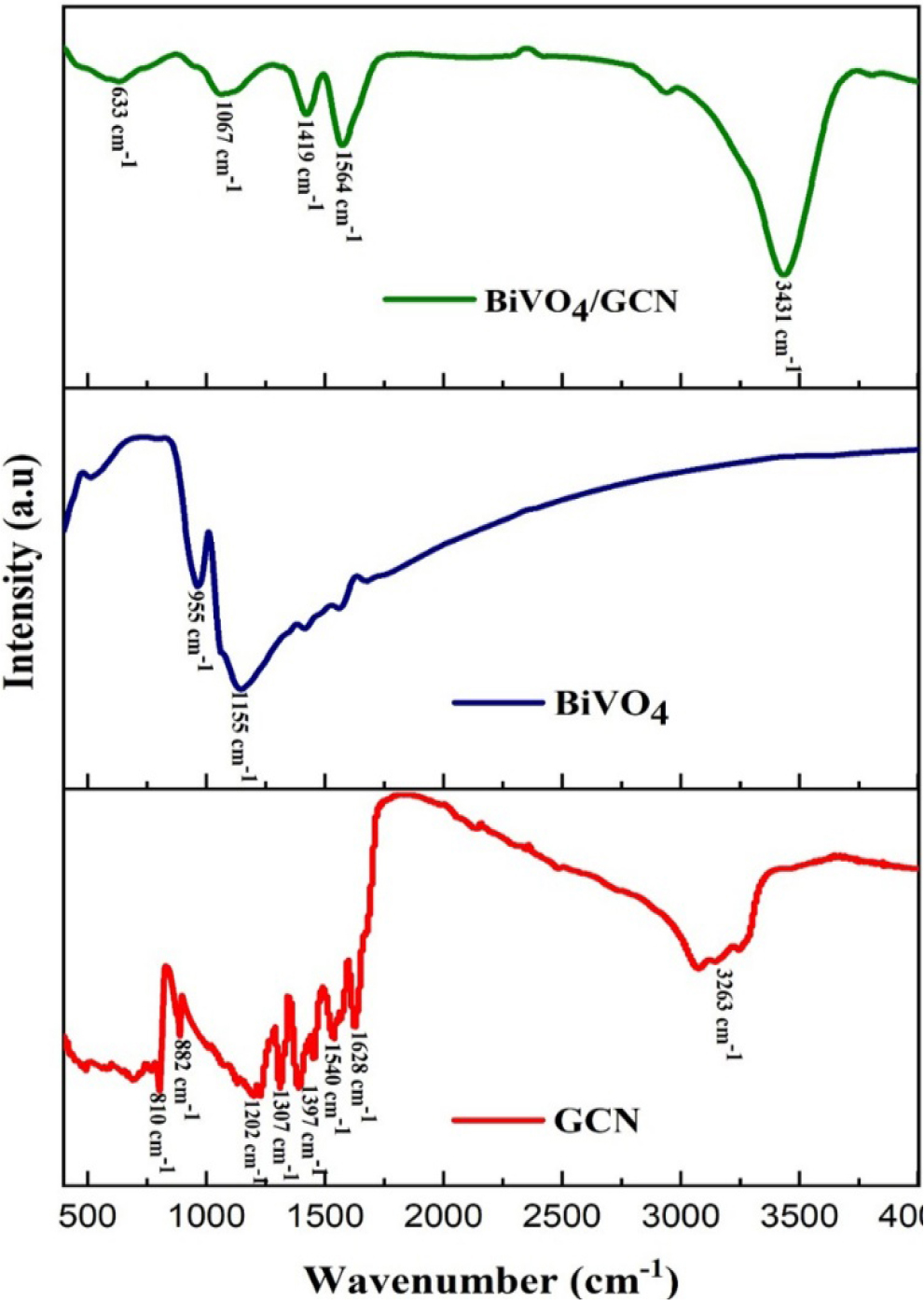
The BiVO4/GCN composite illustrates the characteristic peaks from both GCN and BiVO4. These include bands at 633, 1067, 1419, and 1564 cm-1, along with a broad band at 3431 cm-1[34]. This indicates that both components are present. The observed vibrational bands confirm that the BiVO4/GCN composite was successfully created, and the basic structures of the individual components were preserved.
3.3 Scanning Electron Microscopy Analysis
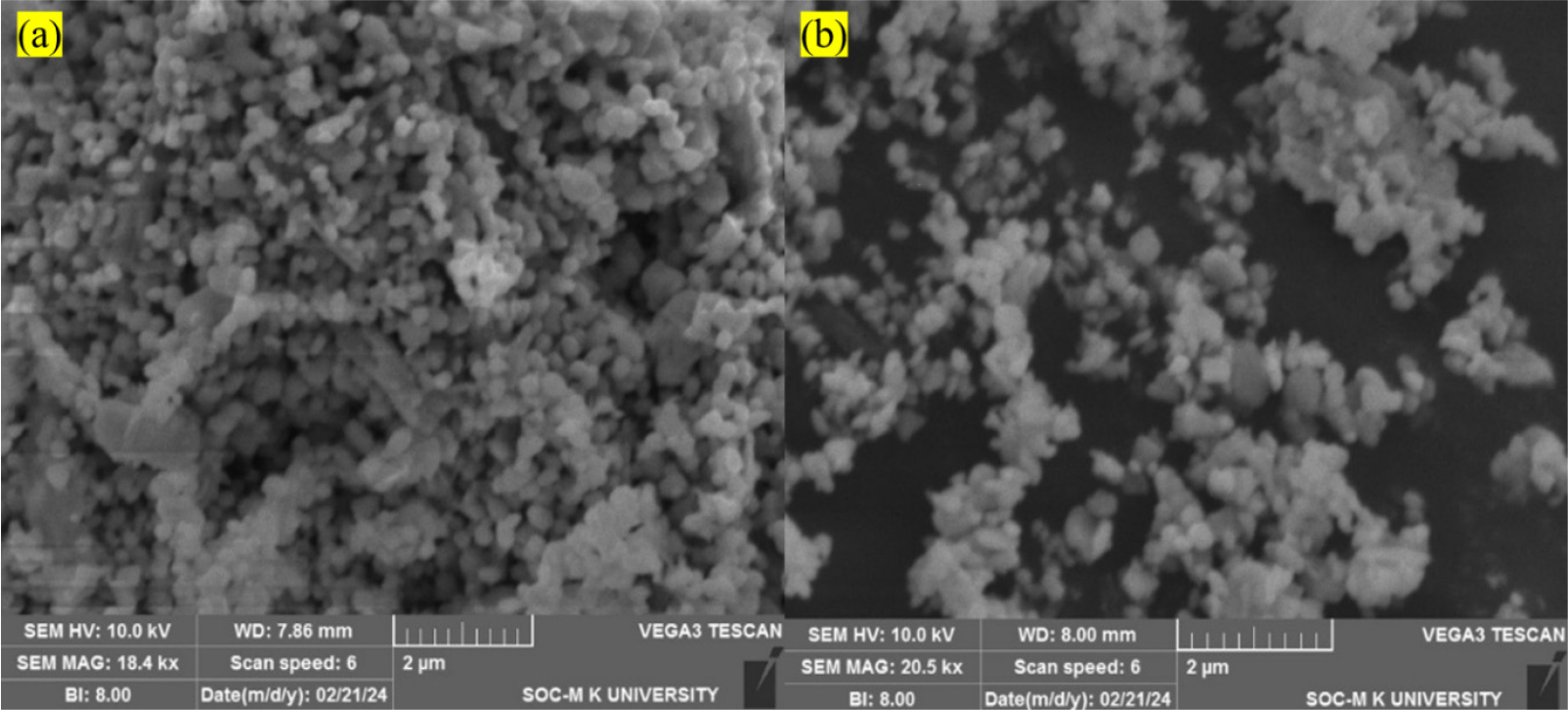
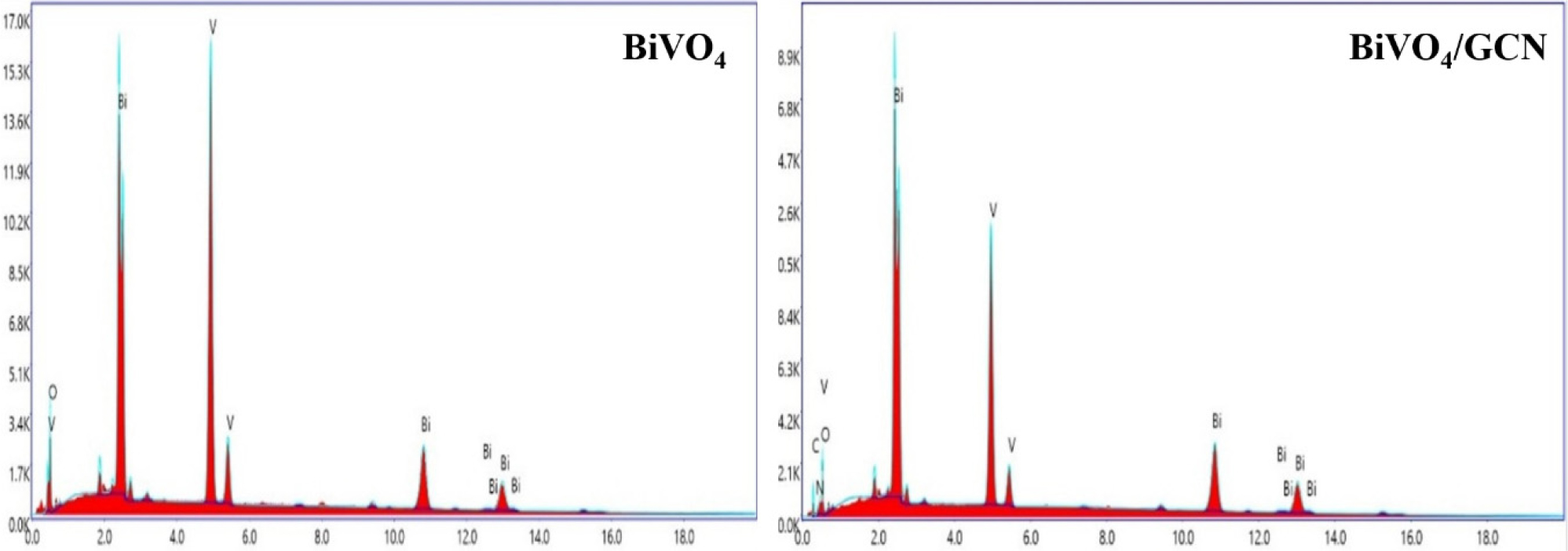
The surface morphology of the synthesized samples was characterized by scanning electron microscopy analysis. Fig. 4(a) SEM image of BiVO4 reveals a spherical shape with uniform particle distribution [35]. Fig. 4(b) shows the agglomerated spherical particle of BiVO4/GCN upon GCN incorporated into the bismuth vanadate. While the GCN exhibits a conventional sheet-like layered structure, the BiVO4 spheres are scattered around the GCN sheet surface, demonstrating the efficient integration of both materials. The excellent purity of the synthesized composite is further confirmed by EDAX analysis (Fig. 5), which demonstrates that the expected components are present without any impurities.
3.4 Optical Analysis
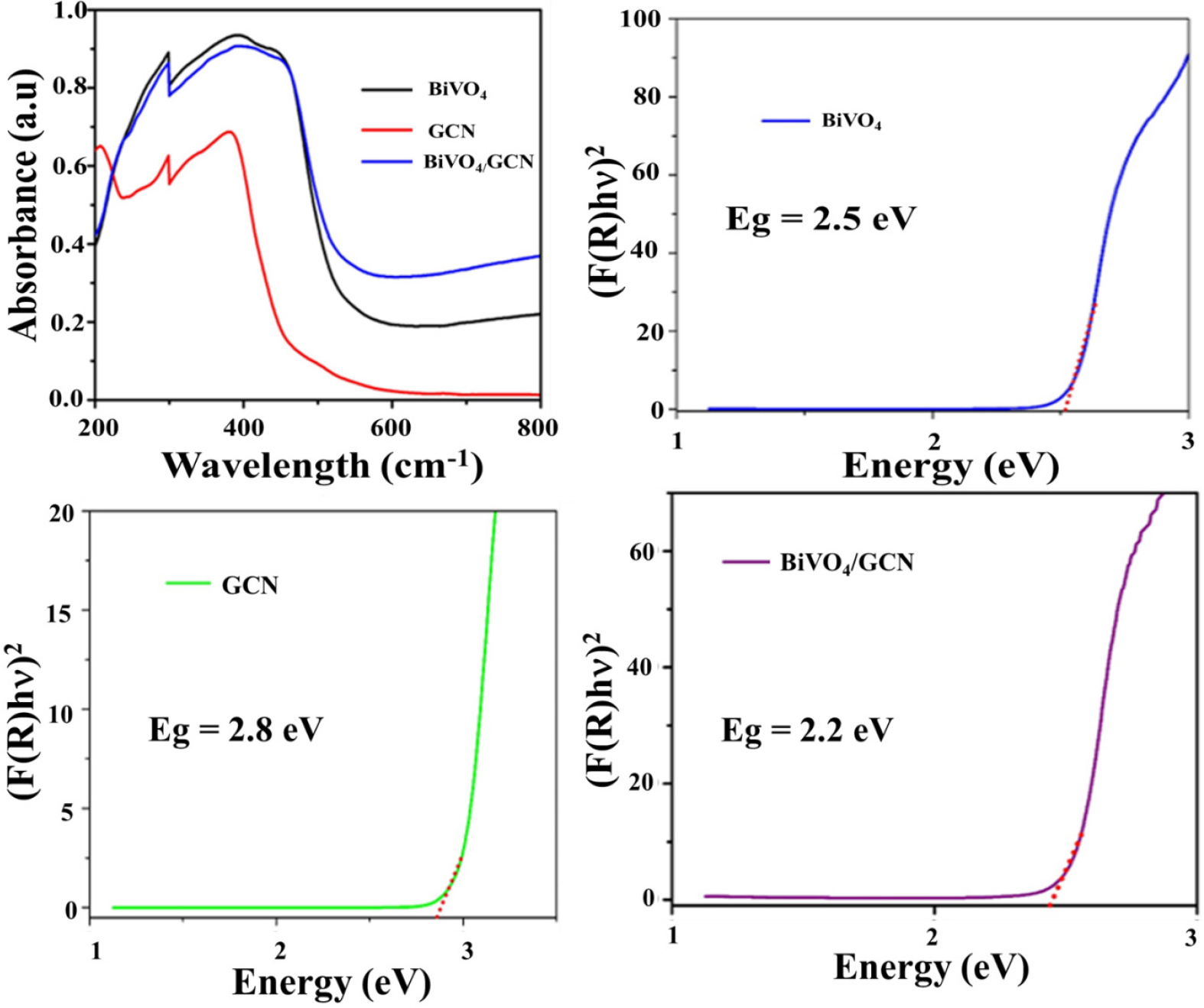
To evaluate the optical properties of the GCN, BiVO4, and BiVO4/GCN, UV-Visible absorption and diffusion reflectance spectroscopy analysis were performed. In Fig. 6, the GCN sample shows an absorption maximum around 390 nm and an absorption edge around 460 nm in the visible region. For BiVO4, the adsorption edge is around 520 nm, which is slightly shifted to a longer wavelength for the Nanocomposite. Compared to pure BiVO4 and GCN, the composite shows a red shift towards longer wavelengths. This red shift indicates better absorption in the visible region [36]. As a result, the composite can act as a better photocatalyst in the sunlight. The band gaps were calculated using the Tauc plot and are shown in Fig. 6(b-d). The band gaps are reported as 2.5 eV, 2.8 eV, and 2.2 eV for BiVO4. GCN, BiVO4/GCN, respectively, which are consistent with the literature [21]. The reduced bandgap of the nanocomposite, which enhances light absorption and catalytic activity compared to the pure sample.
3.5 Photocatalytic Analysis
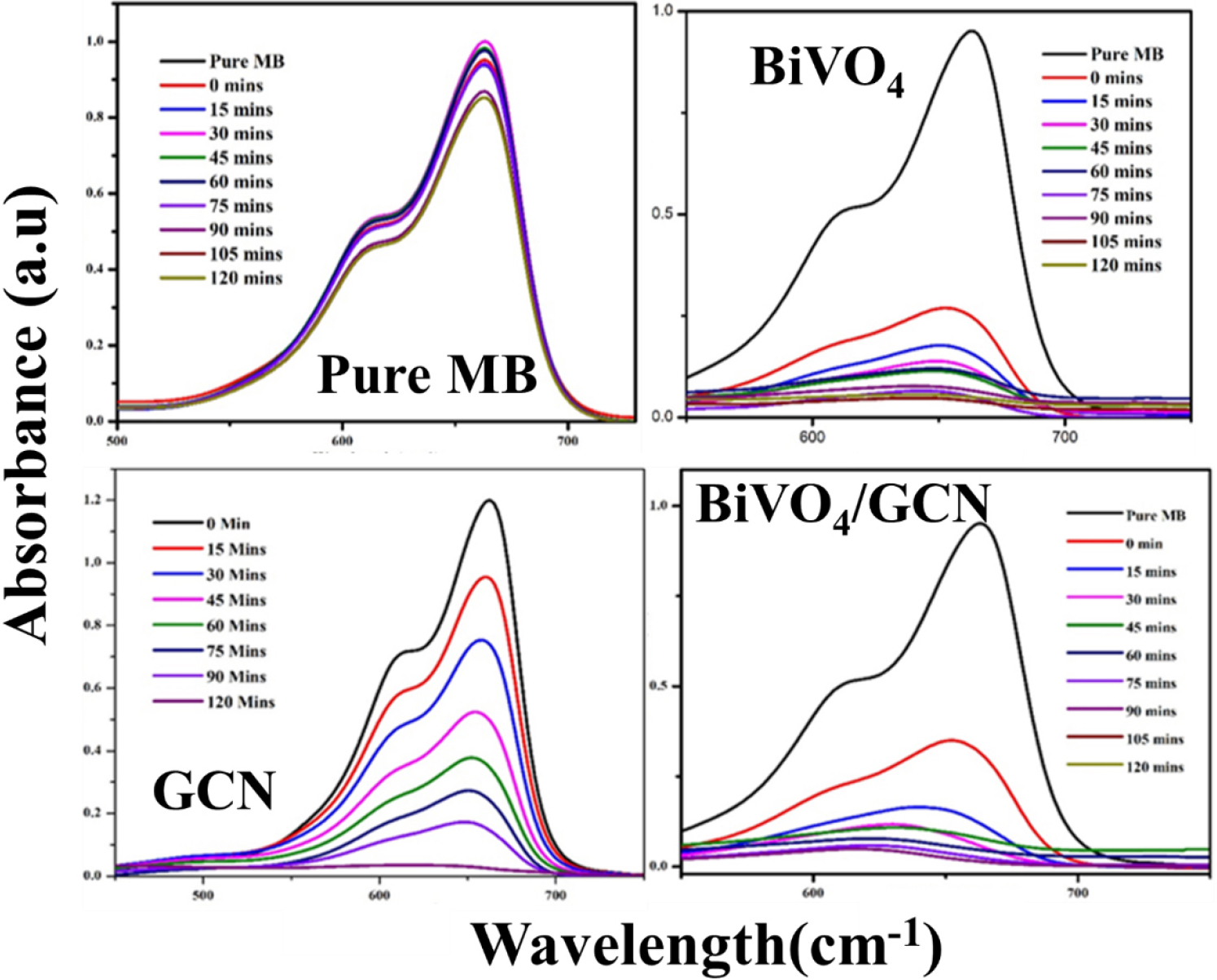
The catalytic activity of the GCN, BiVO4, and BiVO4/GCN nanocomposite was examined by the degradation of the methylene blue dye under sunlight using UV-visible spectroscopy. Fig. 7 shows the time-dependent absorption spectra of methylene blue with GCN, BiVO4, and BiVO4/GCN nanocomposite. Before the photocatalytic experiment, the catalyst and the methylene blue solution were stirred in the dark for 30 minutes to determine the adsorption-desorption equilibrium. The stability of the methylene blue dye was confirmed without any catalyst under the same conditions. Fig. 7(a) shows the degradation behaviour of pure MB in sunlight irradiation, which exhibits negligible degradation. The BiVO4 catalyst demonstrates a gradual decrease in the intensity of the MB absorption peak with increasing irradiation time from 0 min to 120 min.
Here, the BiVO4 undergoes moderate degradation due to the poor charge separation and recombination of electron - hole pairs in pure BiVO4. However, the GCN exhibits higher degradation efficiency than BiVO4, which can be attributed to the visible light response and high charge carrier transport properties [28,31]. Among the investigated catalysts, BiVO4/GCN exhibited the highest photocatalytic activity. Notably, the MB undergoes complete degradation within 120 minutes in sunlight irradiation. This higher efficiency is due to the formation of a heterojunction between BiVO4 and GCN. This structure enhances the separation and transfer of photogenerated electrons and holes [34]. The photo degradation kinetics of MB catalysed by GCN, BiVO4, and BiVO4/GCN nanocomposite are shown in Fig. 8.
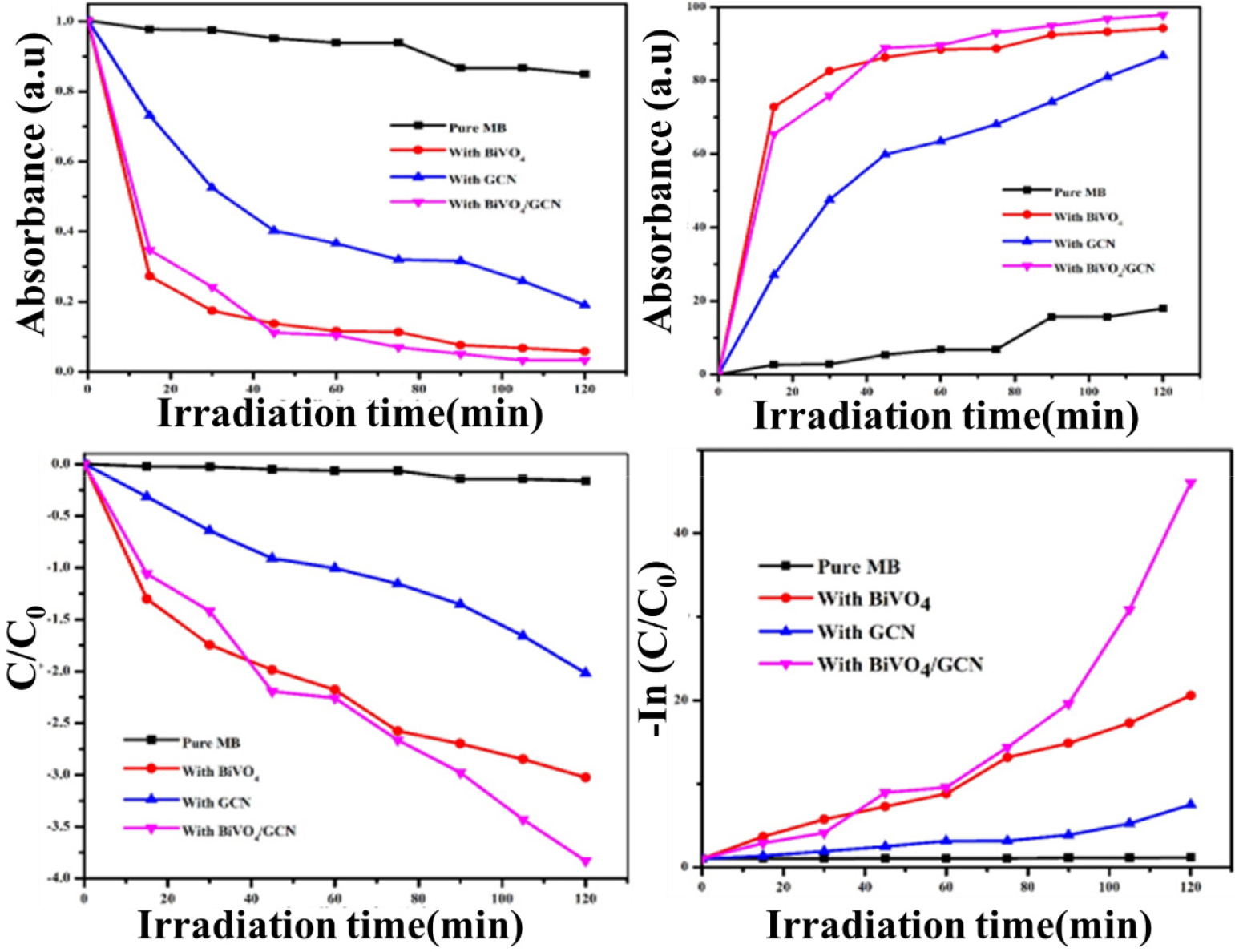
The photocatalytic activity follows the pseudo-first-order kinetics and is given by Eq. (2), (3)
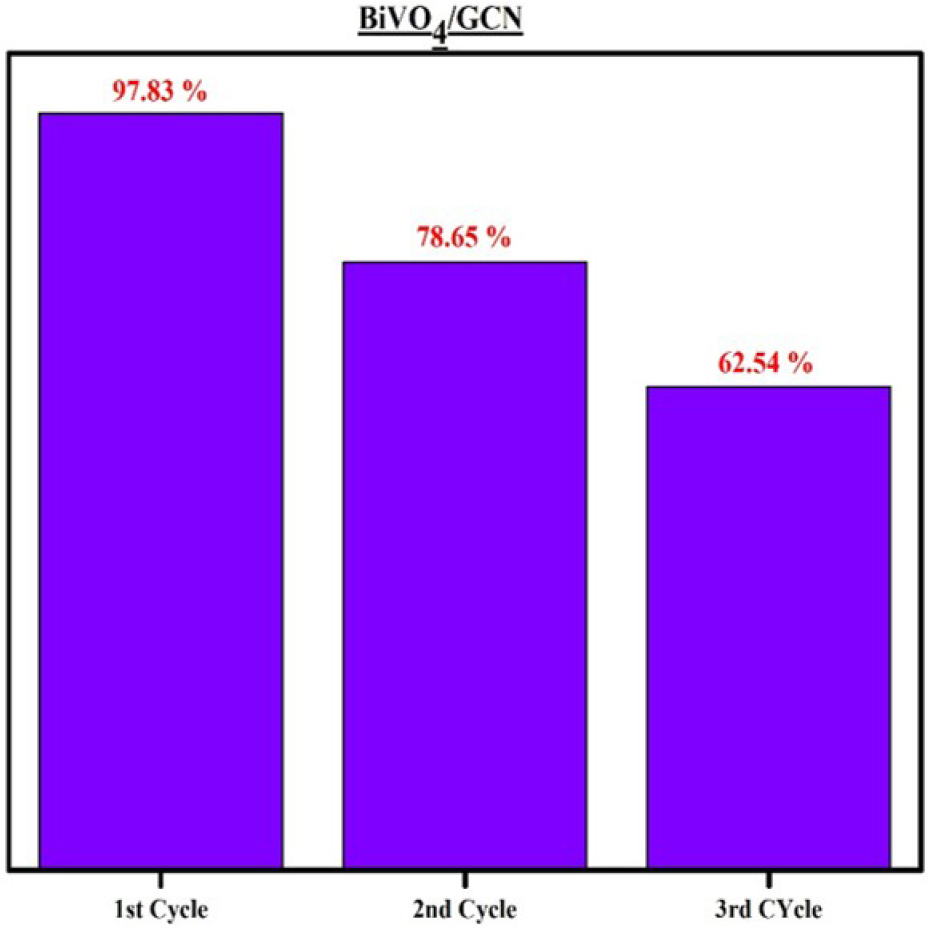
where C0 is the initial concentration, Ct is the concentration after time t, and k is the rate constant of a pseudo-first-order reaction [37]. A linear relationship between ln (C0/Ct) and time was observed [22]. Thus, the degradation efficiency of MB for the BiVO4/GCN was 97.83%, which is significantly higher than that of the individual catalysts, as 86.71% for GCN and 95.15% for BiVO4. A linear relationship between ln(C0/Ct) and time was observed [22]. The degradation efficiency of MB for BiVO4/GCN was 97.83%, which is notably higher than that of the individual catalysts, as 86.71% for GCN and 95.15% for BiVO4. To assess reusability, three successive degradation cycles were conducted (Fig. 9). The efficiency declined from 97.83% in the first cycle to 78.65% in the second and 62.54% in the third, corresponding to a retention of approximately 63.9% of the initial activity. The decrease in efficiency from 97.83% to 62.54% is mostly due to structural degradation and catalyst leaching throughout the recovery and reuse process, which could lead to a reduction in the number of active sites in the subsequent cycles. In addition to that, the intermediates that accumulate on the catalyst surface may block reactive sites and lower light absorption efficiency.
4. Conclusion
In conclusion, the BiVO4/GCN nanocomposite was successfully synthesized by the hydrothermal method. XRD analysis confirmed that both pure BiVO4 and the BiVO4/GCN nanocomposite had a monoclinic structure. FT-IR and EDS analyses showed that GCN was successfully incorporated into the BiVO4 photocatalyst, and no significant impurities were found in the samples. SEM confirmed the formation of the BiVO4/GCN heterojunction. In addition to that, the pure BiVO4 nanosphere clumped together when GCN was added. DRS analysis revealed bandgap energies of 2.5 eV, 2.8 eV, and 2.2 eV for BiVO4, GCN, and BiVO4/GCN, respectively. The photocatalytic performance of the BiVO4/GCN nanocomposite under visible light was evaluated using UV -visible spectroscopy by photocatalytic degradation of methylene blue. The BiVO4/GCN nanocomposite displayed a 97.83% degradation efficiency under visible light. Therefore, the BiVO4/GCN nanocomposite is a promising photocatalyst for efficient dye degradation of methylene blue under visible light.