


1. Introduction
2. Experimental Setup
2.1 Preparation techniques of a WS2/MoS2/g-C3N4 nanocomposite
2.2 Shock tube
3. Results and Discussion
3.1 X-ray diffraction analysis
3.2 FE-SEM analysis
3.3 XPS analysis
4. Conclusions
1. Introduction
Materials science research aims to comprehend the stability of materials under extreme conditions, which is pivotal for developing advanced materials for diverse applications, including aerospace, automotive, and energy sectors. Researchers have recently concentrated on highly resilient materials capable of withstanding extreme conditions, such as high-pressure and high-temperature, which is a critical area of study [1,2,3]. High-pressure and high-temperature science plays a vital role in understanding materials properties without altering their original systems. Over the past two decades, the dynamic shock wave technique has been widely used to explore material behavior under extreme conditions [4,5].
In the 20th century, Reddy et al., developed an indoor tabletop shock tube designed to generate acoustic shock waves for material studies [6,7]. The shock wave loading technique offers valuable insights into material behavior under extreme conditions, aiding in the development of durable materials for harsh environments. To enhance device performance and longevity, researchers worldwide are actively investigating the structural stability of materials under shock, aiming to identify novel configurations that retain their properties similar to those at ambient conditions [8,9,10,11,12,13].
In aerospace applications, shock wave recovery experiments on crystalline substances are a significant research focus that aids researchers in understanding the stability of these materials. Numerous reports have been published regarding the phase stability of materials subjected to the extreme conditions of acoustic shock waves. These experiments offer valuable insights into how materials react to the rapid changes associated with shock waves [12,13]. The impact of shock waves on materials like polycrystals and single crystals has been investigated, and these shock waves affect their structural characteristics. Similarly, the impact of shock waves on the physicochemical properties of specific nanomaterials, such as TiO2, ZrO2, Co3O4, and AgO, has also been studied [14,15,16,17]. Some crystalline materials, such as ZnO, NiO, CeO2, MoS2, WS2, MoSe2, and BaCo3, are highly stable under shock-loaded conditions [10,18,19,20].
Despite numerous studies on transition metal dichalcogenides, there has been limited extensive research on shock wave on transition metal dichalcogenides. Among the two-dimensional materials, tungsten disulfide is a member of the group 6 transition metal dichalcogenide family [21,22,23]. Tungsten, the heaviest transition metal in this family, is less toxic and more cost-effective than molybdenum, rendering it a material with significant potential for a wide range of research and industrial applications. Recently, tungsten disulfide nanomaterials such as WS2 nanotubes, nanoparticles, quantum dots, and WS2-based nanocomposites have been employed in select medical and biological investigations. These WS2 nanomaterials exhibit excellent chemical, physical, optical, and electronic properties, making them valuable in various applications [24,25].
Researchers have extensively studied heterojunction materials based on g-C3N4, including g-C3N4/WO3, KNbO3/g-C3N4, g-C6N6/g-C3N4, g-C3N4/rGO, and g-C3N4/ZnIn2S4[26,27,28]. Existing research has shown that the transitional metal dichalcogenides and g-C3N4 possess suitable band edge positions, enabling the TMDs/g-C3N4 heterojunctions to demonstrate exceptional photocatalytic capabilities. Consequently, the g-C3N4 WS2 system is a highly effective photocatalyst. Graphite-like carbon nitride is a widely used two-dimensional material for producing hydrogen through photocatalysis. g-C3N4 is a non-metallic, non-toxic, and environmentally friendly photocatalyst. Its production is simple and cost-effective, enabling potential mass production. The electrons in its conduction band also have the necessary potential to generate hydrogen [28].
Also, WS2, a member of the TMD family, has a high surface area and high surface chemical stability. Additionally, the edges of the WS2 layers offer abundant active sites that promote hydrogen generation reactions. Furthermore, the WS2/g-C3N4 heterojunction analysis revealed that its absorption spectral curve closely resembles WS2[24].
Based on the reports in the literature, we have synthesized the ternary composite of g-C3N4/WS2/Mo3S4 composite for acoustic shock wave studies. Here, the shock wave compression studies may provide insights into the structural and morphological characteristics and the bonding and arrangement of atoms at the surface level.
2. Experimental Setup
2.1 Preparation techniques of a WS2/MoS2/g-C3N4 nanocomposite
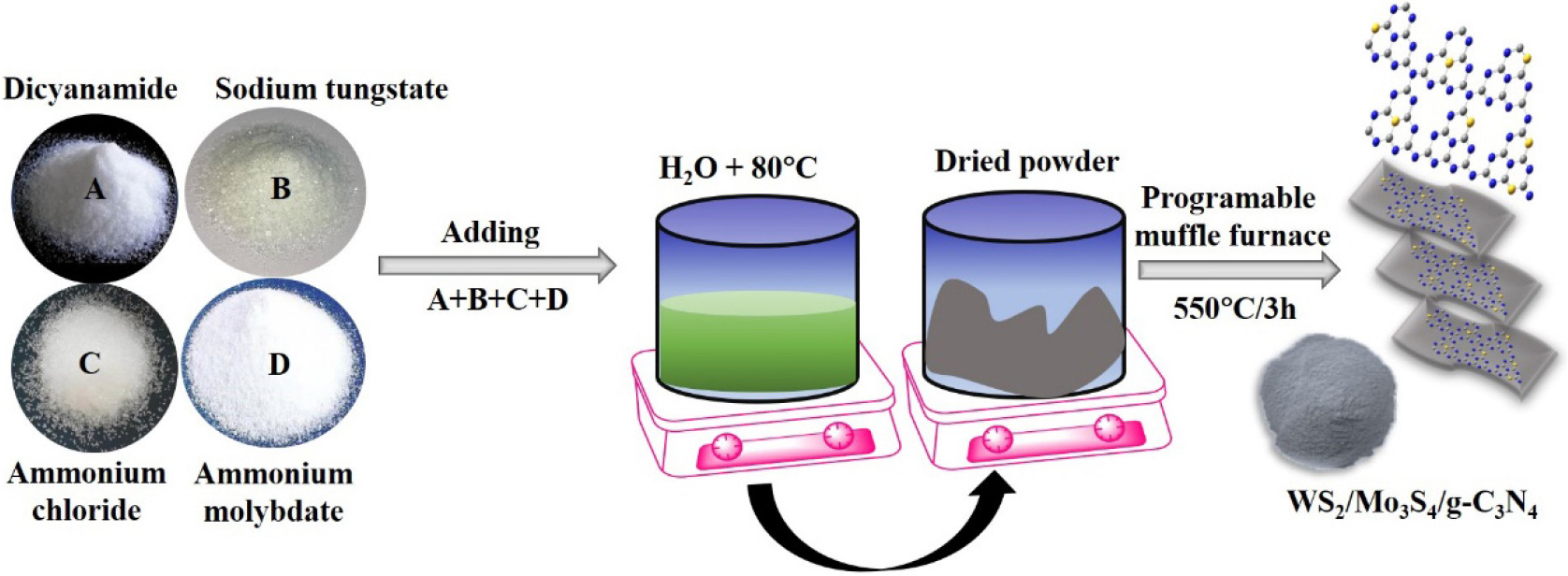
The few-layered graphitic carbon nitride with WS2 and MoS2 nanocomposite was synthesized at 550°C using a two-step and one-pot thermal polycondensation approach. Specifically, 2.0 g of dicyandiamide, 10 g of ammonium chloride, 1.0 g of ammonium molybdate, and 1.0 g of sodium tungstate were thoroughly mixed and ground. The mixture was then diluted with 30 ml of distilled water and placed in a hot air oven at 80°C overnight to dehydrate. The dehydrated substance was subsequently ground into a fine powder and loaded into an alumina crucible, which was sealed with a lid. Using a programmable heating system, the crucible containing the precursor materials was placed in a muffle furnace and subjected to a controlled heating profile: initially ramped at 5 °C/min to 400°C, then at 2 °C/min to 500°C, and finally at 1 °C/min to 550°C. The sample was held at 550°C for 3 hours to ensure complete reaction and crystallization. After natural cooling to room temperature, a light black-colored WS2/MoS2/g-C3N4 nanosheet-like composite was obtained, as shown in Fig. 1.
2.2 Shock tube
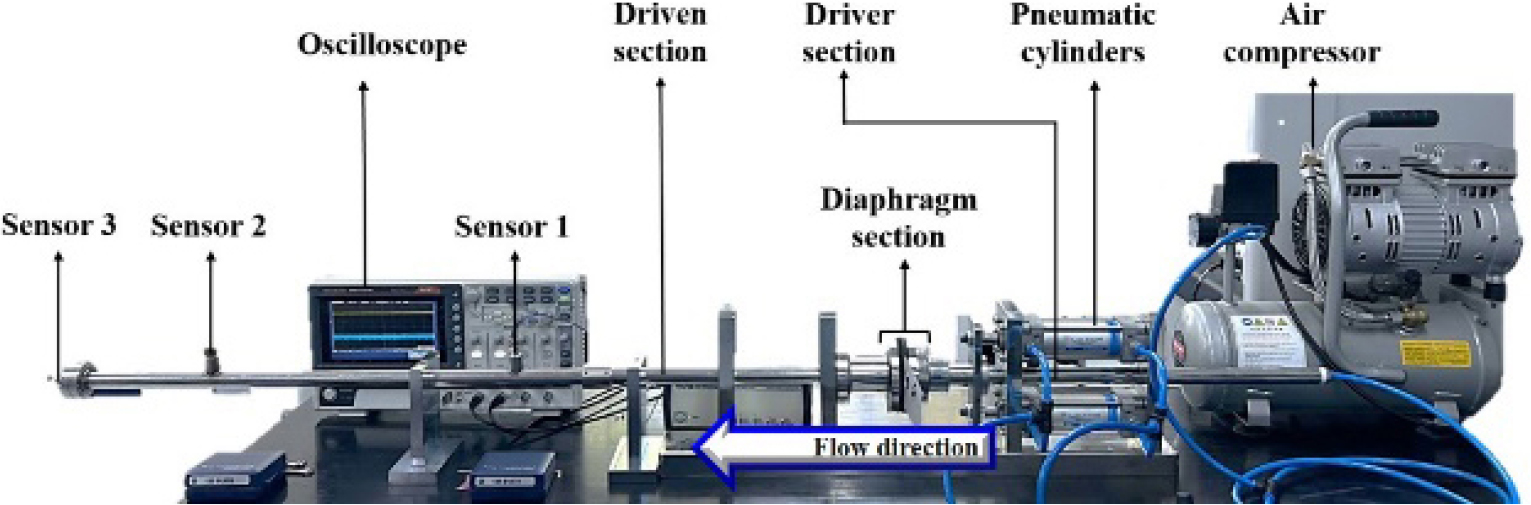
In this study, we carried out tabletop shock tube experiments involving sequences of 100, 200, and 300 shock pulses, each delivered at 3 s intervals. The gas temperature was held at approximately 650 K and the static pressure at about 2 MPa, producing a nominal Mach number of 1.7. Fig. 2 shows a photograph of the experimental setup. After the shock-tube experiments, comprehensive structural and morphological analyses were conducted, and the resulting findings are detailed in the subsequent sections.
3. Results and Discussion
3.1 X-ray diffraction analysis
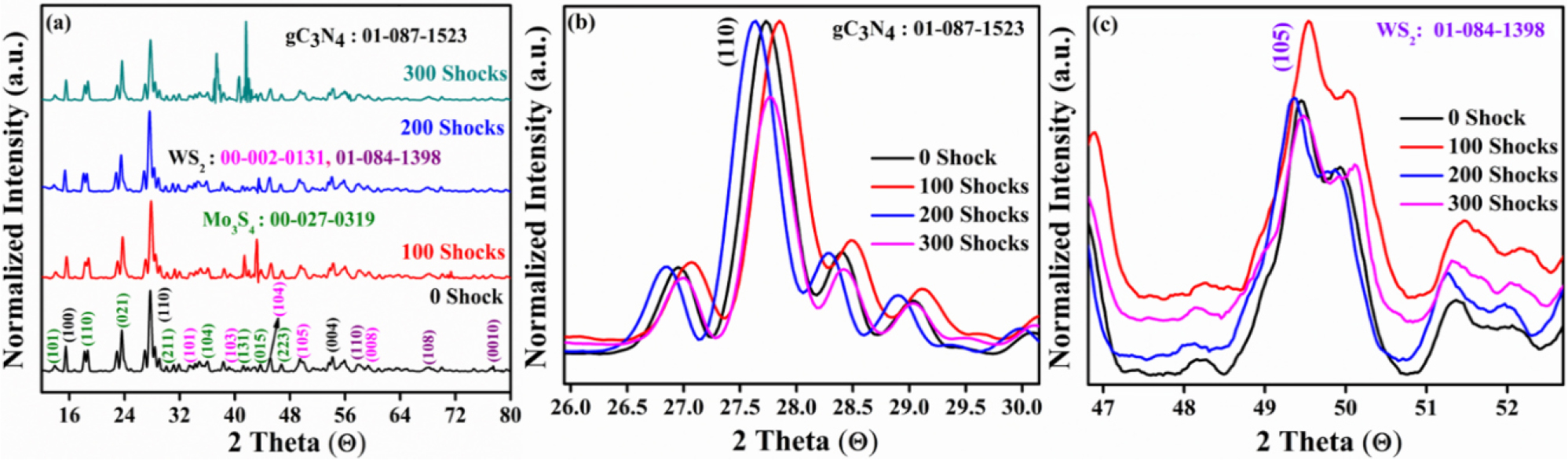
The X-ray diffraction patterns of g-C3N4/WS2/Mo3S4 ternary composite are shown in Fig. 3. The aim of the preparation is to synthesize a WS2/MoS2/g-C3N4 nanocomposite. However, due to insufficient sulfur concentration, specific temperat or pressure conditions, or impurities, the resulting product is a g-C3N4/WS2/Mo3S4 composite, as confirmed by X-ray diffraction. Here, the powder X- ray diffraction for all the shock conditions has been examined to understand the crystallographic phases of the composite materials, and the X-ray diffraction analysis indicates that the material is in a mixed ternary phase is shown in Fig. 3(a). The graphitic carbon nitride (g-C3N4) peaks observed at 15.9° and 27.85° reveal the hexagonal phase. Furthermore, the hexagonal phase of WS2 is observed at 33.408°, 39.492°, 44.142°, 48.376°, and 59.179°, which correspond to the hkl planes and belong to the space group P63/mmc [29,30]. Also, the X-ray diffraction analysis revealed the presence of Mo3S4, with characteristic peaks observed at 13.69°, 19.23°, 23.77°, 30.76°, 34.00°, 34.77°, 41.70°, 43.06°, and 46.74°. These peaks correspond to a rhombohedral crystal structure with the R-3 space group [JCPDS card No: 00-027-0319].
Fig. 3(a) indicates the composite materials are highly stable and resilient to various shock conditions, such as 0, 100, 200, and 300 acoustic shock pulses. No significant changes in X-ray diffraction have been observed, even under these shocked conditions. During the shock wave experiments, no new peaks were detected, and the existing peak was eliminated, further demonstrating that the materials are highly resistant to the applied shock pulses. Moreover, the diffraction peaks resemble the applied shock pulses, and interestingly, the peak shifts are observed under applied shock conditions. For clarification, a zoomed view of the X-ray diffraction peaks is presented in Fig. 3(b), (c). Fig. 3(b) illustrates the structural plane (110) of the g-C3N4 hexagonal phase, with the peaks shifting towards lower and higher angles corresponding to the various shock pulses. Similarly, the structural plane (105) of the WS2 hexagonal phase is depicted in Fig. 3(c), indicating that the diffraction peaks shift to lower and higher angles as the shock pulses increase.
The peak shifts observed under the shock pulses generally resemble the flawed crystal structure of the g-C3N4. Furthermore, the sudden changes in temperature and pressure result in lattice compression, which leads to molecular rearrangements within the crystal structure. The peak shift is also observed for the composite of layered WS2, indicating that the peak shifts for the planes increase with the shock pulses. Generally, the shock pulses induce point defects, dislocations, or stacking faults that lead to crystal structure changes, resulting in the observed peak shifts under shocked conditions.
3.2 FE-SEM analysis
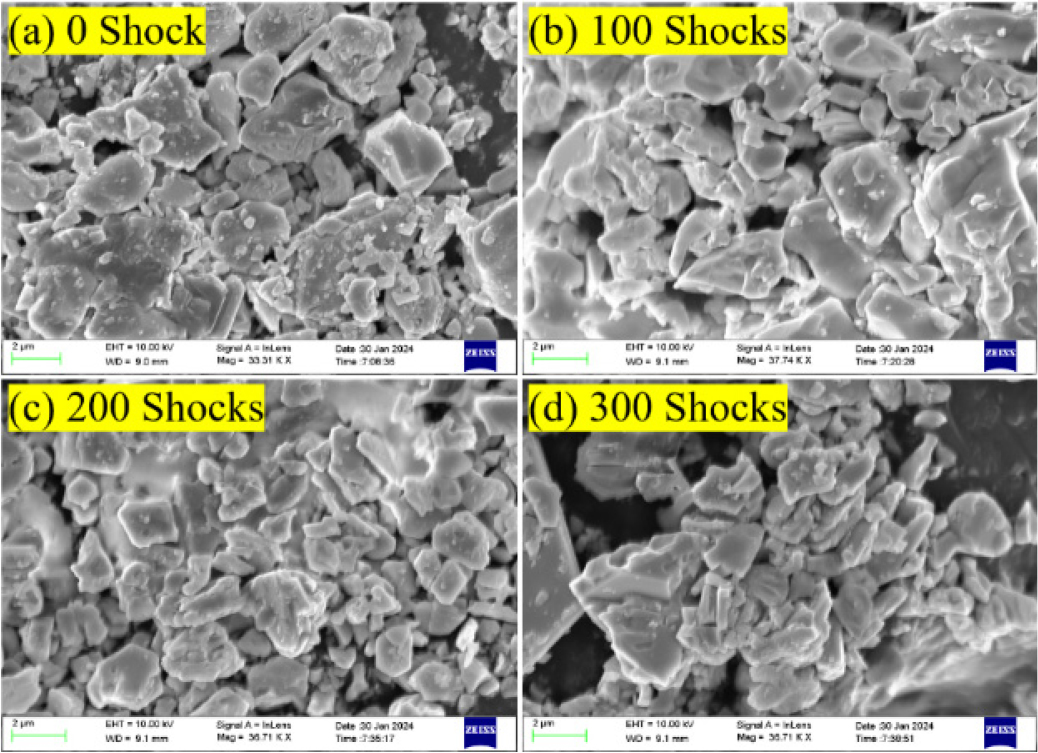
The FE-SEM microscopy was performed to visualize the morphological changes in the control and sample under shocked conditions. The observed FE-SEM micrographs are shown in Fig. 4. The morphological images have revealed that the sheet-shaped structure and particles are slightly agglomerated for both the control and shock conditions. The FE-SEM analysis of the surface morphology confirms that no significant changes have been observed, indicating the particles are stable to the shocked conditions. Additionally, at 200 and 300 shock pulses, the particles have become fragmented and slightly agglomerated due to the high impact of the shock pulses.
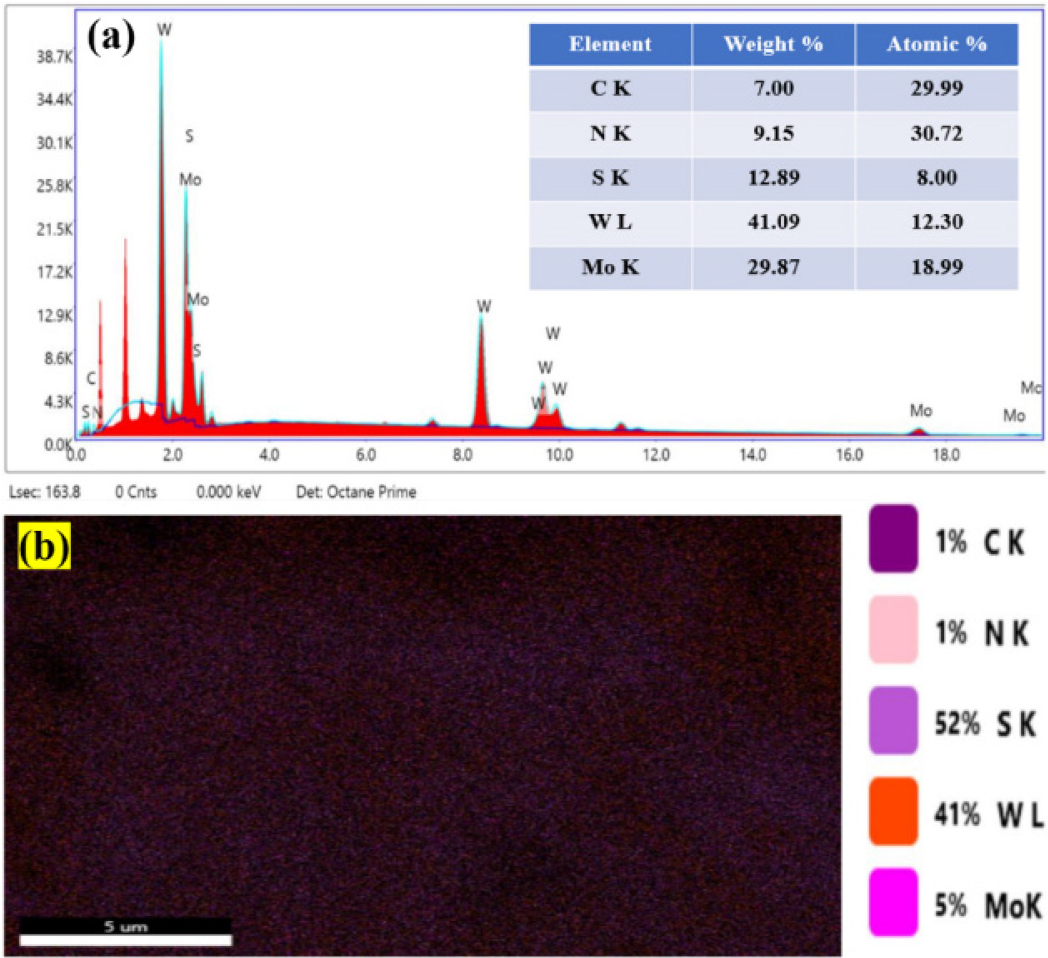
To confirm the elemental composition of the g-C3N4/WS2/Mo3S4 ternary composite, energy dispersive X-ray spectroscopy analysis (EDAX) was performed, and it is shown in Fig. 5(a). The results indicate the presence of carbon, nitrogen, tungsten, and molybdenum elements within the ternary composite is shown in Fig. 5(b). Furthermore, the mapping morphology structure affirms the uniform distribution of the particles throughout the composite material.
3.3 XPS analysis
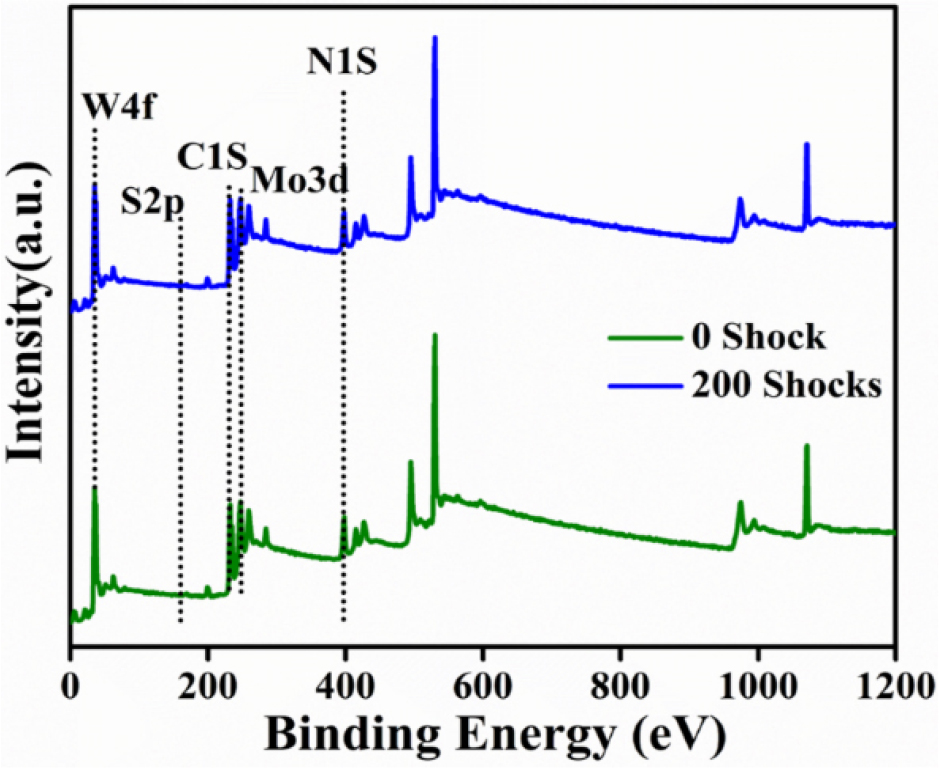
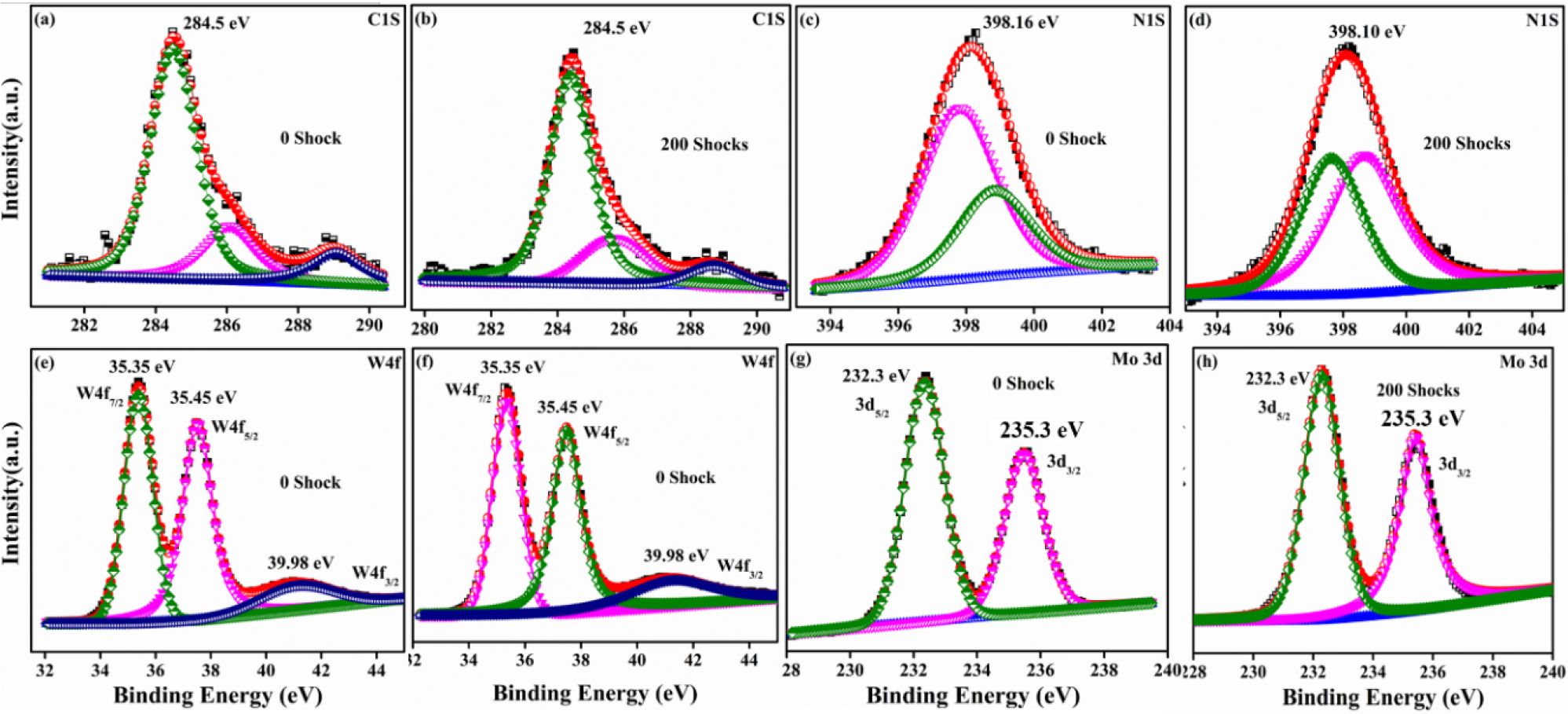
The XPS measurement confirms the chemical composition and valence states of the g-C3N4/WS2/Mo3S4 composite in both control and shock-loaded samples, as illustrated in Fig. 6. The survey spectrum of these samples reveals the presence of C, N, O, W, S, and Mo elements. Furthermore, the deconvoluted spectrum of C1S shown in Fig. 7(a), (b) indicates peaks at 284.5 eV, 286.48 eV, and 288.78 eV, corresponding to C-C, C-N, and N=C-N bonds, respectively. This trend has been consistently observed for the 200 shocks, and the C-C band at 284.5 eV is characteristic of Sp2 hybridized carbon from g-C3N4. Additionally, the bond among the C and N elements present in the spectrum affirms the N1S spectral signature of g-C3N4 as shown in Fig. 7(c), (d), with deconvoluted peaks at 398.16 and 399.62 corresponding to the Nsp2 hybridized triazine rings and binary or ternary nitrogen bonded with carbon in the form of N-3. Furthermore, the peak of W4f shown in Fig. 7(e), (f) reveals peaks at 32.94 eV, 35.37 eV, and 37.89 eV, indicating the valence states of W4f7/2, W4f5/2, and W4f3/2, respectively. The first two peaks show spin-orbit components of W4+, and the third one refers to the spin-orbit of W6+, substantiating the oxidization of WS2 on the surface of g-C3N4. The deconvoluted Mo3d spectrum exhibits two distinct peaks at 232.3 eV and 235.3 eV, corresponding to the Mo3d3/2 and Mo3d5/2 electron energy levels, shown in Fig. 7(g), (h). This spin-orbit splitting confirms the prevalent Mo4+ oxidation state in the sample [29,30,31].
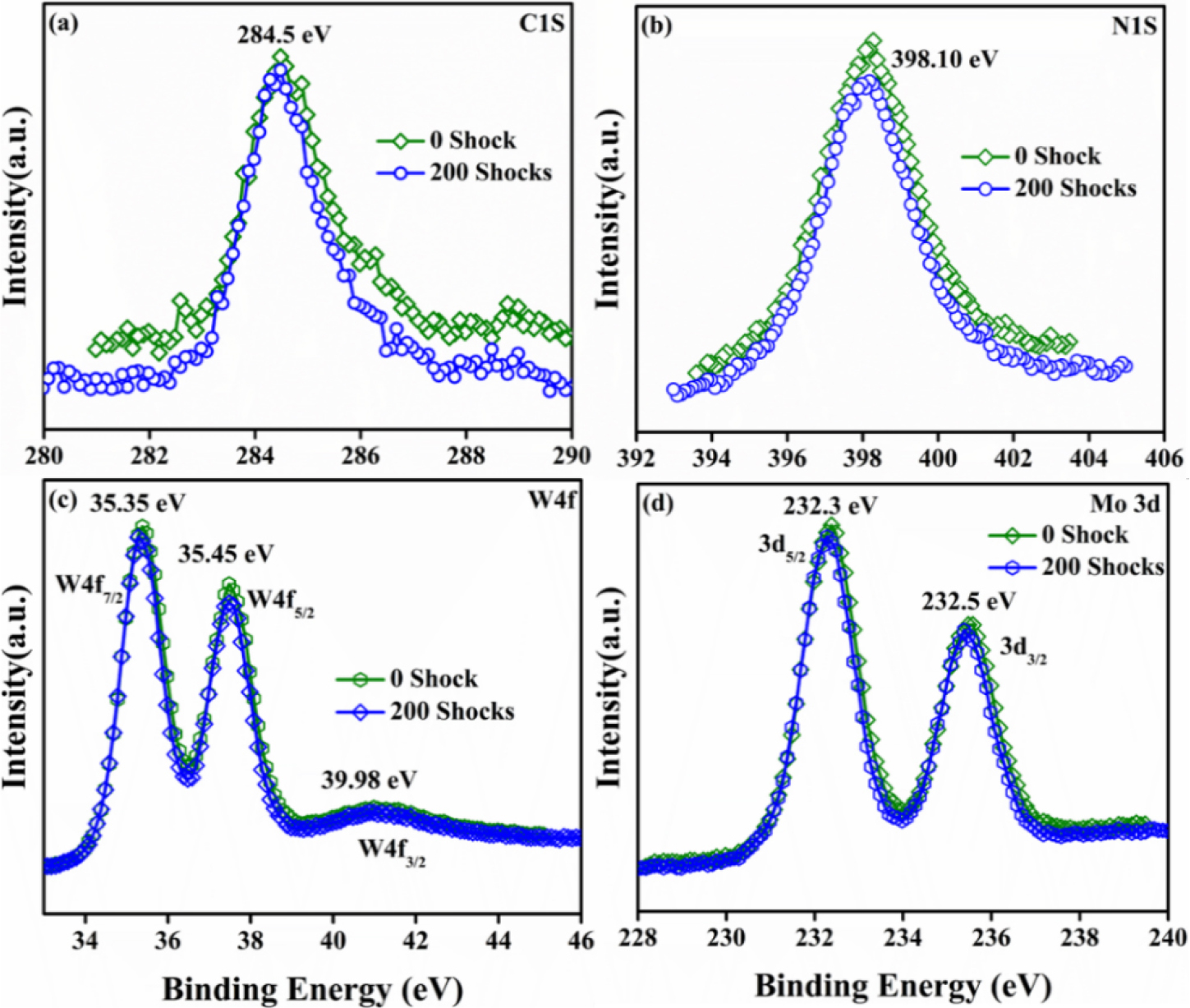
For the shock compression, the primary signals of the C1S, N1S, W4f, and Mo3d elements were compared for the control and shock-loaded samples of the g-C3N4/WS2/Mo3S4 ternary composite is shown in Fig. 8(a)-(d). The results reveal no shift in binding energy and no abrupt changes in intensity due to the applied shock. Therefore, the XPS spectrum confirms that the composite materials are highly stable and resilient to the shock applied, making them particularly suitable for various applications, including aerospace, automotive, and energy sectors.
4. Conclusions
The study demonstrates that the g-C3N4/WS2/Mo3S4 ternary composite maintains its structural confirmations under shock wave conditions. Even after being exposed to 100, 200, and 300 shocks, the composite maintains its mixed ternary phase without undergoing notable structural and spectrum modifications, according to X-ray diffraction and XPS studies. But, in the X-ray diffraction reveals the shift in lower and higher angle under shocked conditions due to the shock pulses inducing point defects, dislocations, or stacking faults. In morphology, the sheet shaped structure is observed for the control samples, and it is stable for 100 and 200 shock-loaded samples. At 300 shocks, the sheet shaped structure in morphology was fragmented and agglomerated. Also, the X-ray diffraction confirms that no new peaks are observed and existing peaks do not disappear under shocked conditions due to the material’s high resilience to the shock pulses. Hence, the shock studies confirm that the materials are stable and suitable for military, defense, and aerospace applications.