


1. Introduction
2. Experimental Setup
2.1 Experimental test rig
2.2 Test fuel and experimental conditions
2.3 Experimental procedures
2.4 Pyrolysis products analyses
2.5 Analysis methods
3. Results of Pyrolysis Experiments
3.1 Fuel conversion and gas production rates
3.2 Pyrolysis products
4. Development of Global Reaction Model
5. Numerical Simulation
5.1 Simulation setup
5.2 Results and discussion
6. Conclusion
1. Introduction
For hypersonic flight above Mach 5, it is necessary not only to address the aerothermodynamic heating of the fuselage surface caused by high-speed airflow and the high-temperature heating inside the engine but also to ensure that the fuel is smoothly atomized/mixed and stably combusted within the extremely short residence time of air in the scramjet combustor [1,2,3]. One of the technologies studied to overcome this challenge is active regenerative cooling, which utilizes onboard fuel as a coolant to mitigate high-temperature issues in hypersonic vehicles [2,3]. Hydrocarbon aviation fuel, which remains in a liquid state at room temperature, making it easy to store and transport, is generally considered the preferred fuel for hypersonic vehicles. To prevent phase changes and enhance heat transfer characteristics in the regenerative cooling system, such fuels are operated above their critical pressure. When circulating as a coolant, they inevitably heat up to a supercritical state while absorbing a large amount of heat from the fuselage and engine walls [4]. During this process, the fuel undergoes endothermic decomposition into low molecular-weight hydrocarbons such as methane, ethylene, and hydrogen. When these decomposed fuels enter the combustor, they mix with air much more rapidly than the original fuel, significantly improving the efficiency of supersonic combustion [5]. In particular, the distribution of thermal cracking products has a crucial impact not only on the combustion performance of the scramjet engine, such as ignition delay and flame stability, but also on the cooling characteristics of hypersonic vehicles, including the chemical heat sink [6]. Therefore, to develop an efficient regenerative cooling system for hypersonic vehicles and optimize the operating conditions and configuration of cooling channels, it is essential to thoroughly understand the thermal decomposition characteristics of supercritical hydrocarbon fuels.
JP-10 is a high-density hydrocarbon aviation fuel, primarily composed of exo-THDCPD (C10H16, exo-tetrahydrodicyclo-pentadiene). It has a polycyclic molecular structure, which results in a low specific volume and a high energy density per unit volume. Due to these characteristics, JP-10 can be efficiently applied to hypersonic vehicles where fuel tank volume is extremely limited [5,6]. Consequently, research on the thermal decomposition characteristics of JP-10 is actively being conducted worldwide to develop practical regenerative cooling systems and scramjet engines. Notably, Davidson et al. [7] conducted thermal cracking experiments on JP-10 using a shock tube at loading pressures ranged from 30 to 80 mbar, resulting in reflected shock pressures of 1.2-1.5 bar. The reaction products were analyzed using high-temperature UV absorption spectra, confirming that cyclopentene is the primary initial product of JP-10 decomposition. Following this study, several research groups have carried out experiments using flow reactors to simulate the thermal decomposition environment of fuel within actual regenerative cooling channels. Specifically, Rao and Kunzru [8] performed JP-10 pyrolysis experiments in a circular tube flow reactor with an inner diameter of 7.7 mm under atmospheric pressure conditions at a temperature range of 903-968 K. Under these conditions, the conversion rate ranged from 10.4% to 61.1%, and the primary thermal decomposition products were identified as methane, ethylene, propylene, cyclopentene, cyclopentadiene, benzene, and toluene. In addition, Xing et al. [9] conducted JP-10 thermal decomposition experiments over a wide pressure range of 0.1-3.8 MPa to analyze its pyrolysis characteristics in subcritical and supercritical states. Their experimental results showed that as pressure increased, the production ratio of alkenes decreased. From the distribution of the resulting products, they proposed a hypothetical pyrolysis mechanism. Meanwhile, Liu et al. [10] conducted pyrolysis experiments of JP-10 using a batch reactor under a pressure of 4 MPa and within a temperature range of 360-420°C. They reported that mixing Pt@FGS nano-catalysts with the fuel enhanced both the fuel conversion and the hydrogen production rate.
Based on these experimental studies, research is also being conducted to develop a JP-10 pyrolysis model applicable to computational fluid dynamics (CFD) simulations for designing regenerative cooling channels and scramjet engines. Specifically, Herbinet et al. [11] proposed a detailed chemical reaction model for exo-THDCPD, which includes 898 chemical species and 2,623 chemical reactions, and presented simulation results using CHEMKIN. Additionally, Li et al. [12] developed a model comprising 316 chemical species and 807 reactions, while Vandewiele et al. [13] utilized the Reaction Mechanism Generator (RMG) program to develop a detailed chemical reaction model for JP-10. However, these detailed reaction models are highly complex, containing hundreds of chemical species and thousands of reactions, leading to high computational costs. Therefore, there is a need to develop a global reaction model that is computationally efficient and suitable for numerical analysis. A representative example of such a model is the one-step reaction PPD (Proportional Product Distribution) model, which simplifies the decomposition process by focusing on the distribution of key final products rather than considering intermediate pyrolysis species. While this model has limitations in precisely simulating actual chemical reactions, it offers reasonable accuracy within a practical range and is much simpler than detailed chemical models, making it suitable for parametric studies in CFD-based regenerative cooling channel design [14,15]. However, according to existing literature, research on global reaction models for JP-10 (or exo-THDCPD) remains scarce. One of the few reported studies is the Differential Global Reaction (DGR) model proposed by Wang et al. [16], highlighting the need for further research on developing global reaction models for JP-10.
In experiments using a flow reactor, coking occurs easily for JP-10 as the conversion rate increases, which hinders flow and heat transfer seriously. As a result, most previous studies conducted in a mini-channel flow reactor failed to achieve high conversion rates for JP-10 [16]. On the other hand, batch reactors have the drawback of making it difficult to maintain a constant pressure, as they do not allow control over the inflow or outflow of gases during the experiment, leading to a continuous increase in internal pressure. However, experiments using a batch reactor can still be used to analyze the thermal decomposition characteristics over a wide range of conversion rates, regardless of coking occurrence. Based on this background, a batch reactor experimental setup was established, and a series of experiments were conducted to investigate the thermal cracking characteristics of exo-THDCPD under supercritical conditions, ultimately leading to the development of an endothermic decomposition model. In particular, rather than focusing on a detailed reaction pathway analysis, the study emphasized the quantitative analysis of final products for the development of a global reaction model of exo-THDCPD. Accordingly, the distribution of pyrolysis products as a function of fuel conversion rate was analyzed, and by using this experimental data, a global one-step reaction PPD (Proportional Product Distribution) model for exo-THDCPD was developed. The model was then implemented in computational fluid dynamics (CFD) software to perform simulations, and the results were compared with experimental data obtained from mini-channel flow reactor experiments conducted by the authors’ research group, as well as previous studies, to evaluate the accuracy of the developed model. In addition, to further understand the endothermic characteristics of exo-THDCPD within the regenerative cooling channel, the developed model was used to perform computational analysis of fuel temperature and conversion rate variations inside the reactor in response to changes in heat flux.
2. Experimental Setup
2.1 Experimental test rig
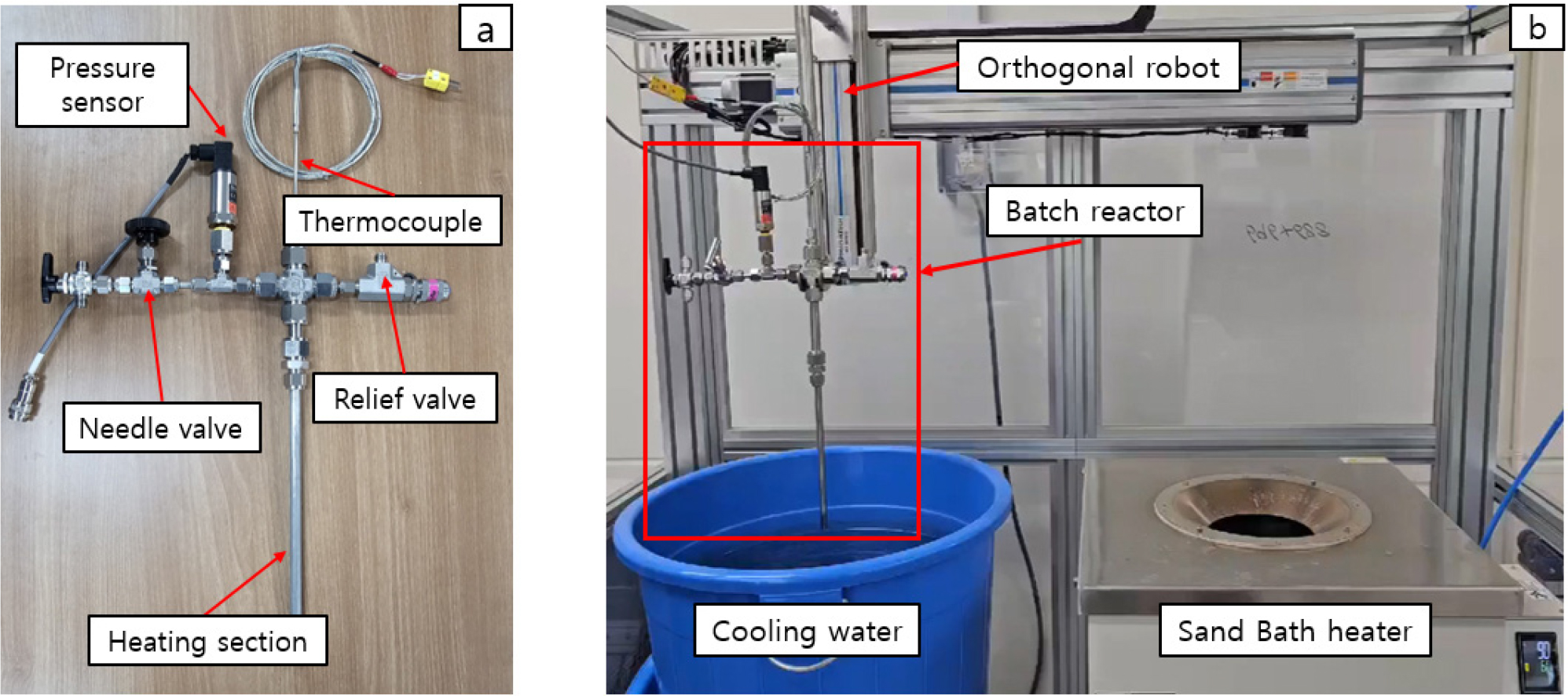
Thermal cracking experiments were conducted by using a batch reactor assembly, as shown in Fig. 1(a). The setup consists of a pressure sensor, a thermocouple, a needle valve, a relief valve, and a heating section. Typically, Inconel and stainless steel are used as materials for the heating section [17,18]. According to previous studies, the pyrolysis reaction of hydrocarbon aviation fuels is significantly influenced by the material composition in the following order: copper, nickel, iron, and stainless steel [19]. Therefore, instead of Inconel which contains nickel as a major component, this study used stainless steel (SUS316) for the heating section, as it has excellent heat resistance while minimizing catalytic decomposition effects [18,19].
The batch reactor assembly was integrated into the pyrolysis reaction experimental test rig, which consists of a heater, cooling water, and an orthogonal robot, as shown in Fig. 1(b). The heating and cooling of the batch reactor are achieved by moving it between the heater and room-temperature cooling water using the orthogonal robot. In previous studies, achieving high-temperature conditions was challenging due to heater temperature limitations, and pyrolysis experiments were primarily conducted by allowing the fuel to react at relatively low temperatures for extended time periods to achieve a high conversion rate [10,20,21,22]. In this study, however, a custom-made sand bath heater was implemented, in which compressed air fluidizes alumina sand to provide heating. This system enables rapid fuel conversion even at high temperatures of up to 700°C, allowing for short-duration reactions while still achieving high conversion rates.
2.2 Test fuel and experimental conditions
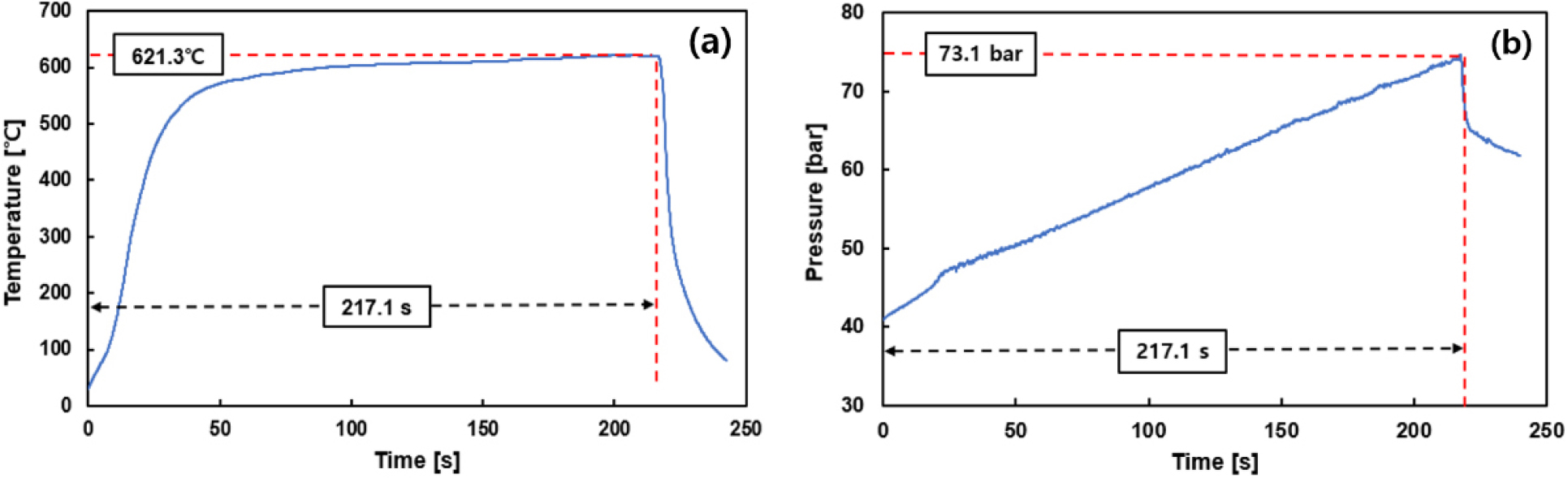
The test fuel is exo-THDCPD (C10H16) at 99.0 wt% purity with the critical pressure and temperature reported to be 37.3 bar and 424.9°C, respectively [23,24]. To ensure that the fuel remains in a supercritical state, the initial reaction pressure was set to 40 bar, and the reaction temperature was maintained above 550°C. When liquid fuel is heated under conditions above the critical pressure, it reaches a supercritical state without undergoing any phase change. Detailed experimental conditions are summarized in Table 1. The fuel (2 mL) was reacted at temperature conditions ranging from 550°C to 630°C in 20°C increments, with reaction durations of 50, 100, 160, and 220 seconds. Additionally, to obtain more data at high conversion rates, extra experiments were conducted at 610°C for 280 seconds and 620°C for 220 seconds. During the experiments, fuel temperature and pressure variations were monitored using a thermocouple and a pressure sensor installed in the batch reactor assembly. The heater temperature was set to the target reaction temperature. The fuel temperature inside the reactor initially increased rapidly for approximately 40 seconds after the reaction started, followed by a more gradual rise. In contrast, the internal pressure of the reactor continuously increased as gaseous products formed during the reaction. This trend is characteristic of experiments using a constant-volume reactor and has been reported in previous studies [20,21]. The reaction time was measured from the moment the reactor was placed into the heater. Once the target reaction time was reached, the reactor was immediately moved to cooling water to terminate the reaction. These trends can be observed in Fig. 2, which presents the temperature and pressure profiles over time under the conditions of 630°C, 40 bar, and 220 seconds.
Table 1.
Experimental conditions.
| Parameter | Value |
| Temperature | 550-630°C |
| Initial pressure | 40 bar |
| Reaction time | 50-280 s |
| Fuel volume | 2 ml |
2.3 Experimental procedures
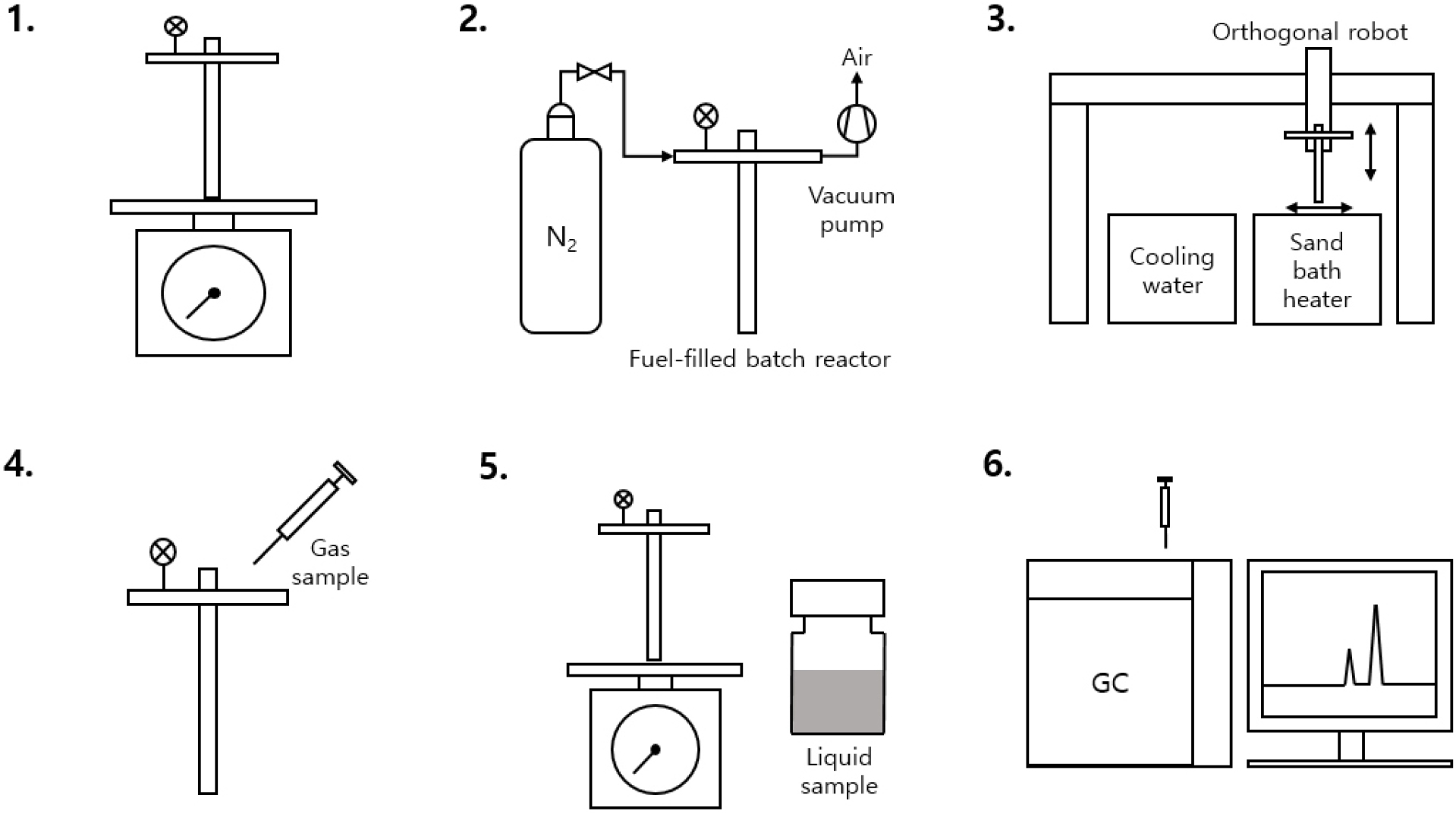
The pyrolysis reaction experimental procedure is summarized in Fig. 3. First, the mass of the heating section is measured before and after fuel injection to accurately determine the initial mass of the injected fuel (1). Next, the heating section is assembled into the batch reactor, and a vacuum pump is used to remove all air (especially oxygen) from the reactor. Then, high-purity nitrogen (99.999%) is introduced to pressurize the reactor to the desired experimental pressure (2). Once the experimental conditions are set, the reactor is mounted on the orthogonal robot and moved to the heater for heating. After the designated reaction time elapses, the reactor is immediately moved to room-temperature cooling water to rapidly terminate the reaction (3). After cooling, gaseous products are extracted, and the remaining gas inside the reactor is vented (4). The mass of the heating section is then measured again, and liquid products are extracted (5). Finally, the extracted gas and liquid products are analyzed by using the gas chromatography systems (6).
2.4 Pyrolysis products analyses
Three types of Gas Chromatography (GC) systems were used for the analysis of pyrolysis products. For the identification and relative ratio analysis of liquid products, a Shimadzu GCMS-QP2020 NX gas chromatography-mass spectrometer (GC-MSD) was utilized. The quantification of hydrogen was performed using an iGC7200A GC (DS Science Inc.) equipped with a thermal conductivity detector (TCD). Additionally, for the mass fraction analysis of low molecular-weight hydrocarbons, which exist in the gas phase at room temperature, and for fuel composition analysis before and after the reaction, an Agilent 8860 GC equipped with a flame ionization detector (FID) was employed. The detailed settings of the GC instruments are summarized in Tables 2 and 3.
Table 2.
Analysis conditions of GC-MSD and TCD.
Table 3.
Analysis conditions of GC-FID.
2.5 Analysis methods
The degree of fuel pyrolysis is typically evaluated using fuel conversion rate and gas production rate as key indicators. Based on previous studies that conducted pyrolysis experiments using a batch reactor, the fuel conversion rate is calculated by Eq. (1), and the gas production rate is determined using Eq. (2)[10]. The selectivity, which represents the number of moles of a specific product per mole of decomposed fuel, was calculated using Eq. (3).
Here, mo represents the mass of the fuel before the reaction, and ml is the mass of the liquid-phase fuel after the reaction. mi denotes the mass of a specific product. In addition, wo and wl refer to the mass fractions of exo-THDCPD before and after the reaction, respectively. MWi is the molecular weight of the product, and MWo is the molecular weight of exo-THDCPD. The mass of the liquid fuel was measured using a precision electronic scale, while the mass fraction of exo-THDCPD was determined from the peak area ratio obtained through GC-FID analysis.
3. Results of Pyrolysis Experiments
3.1 Fuel conversion and gas production rates
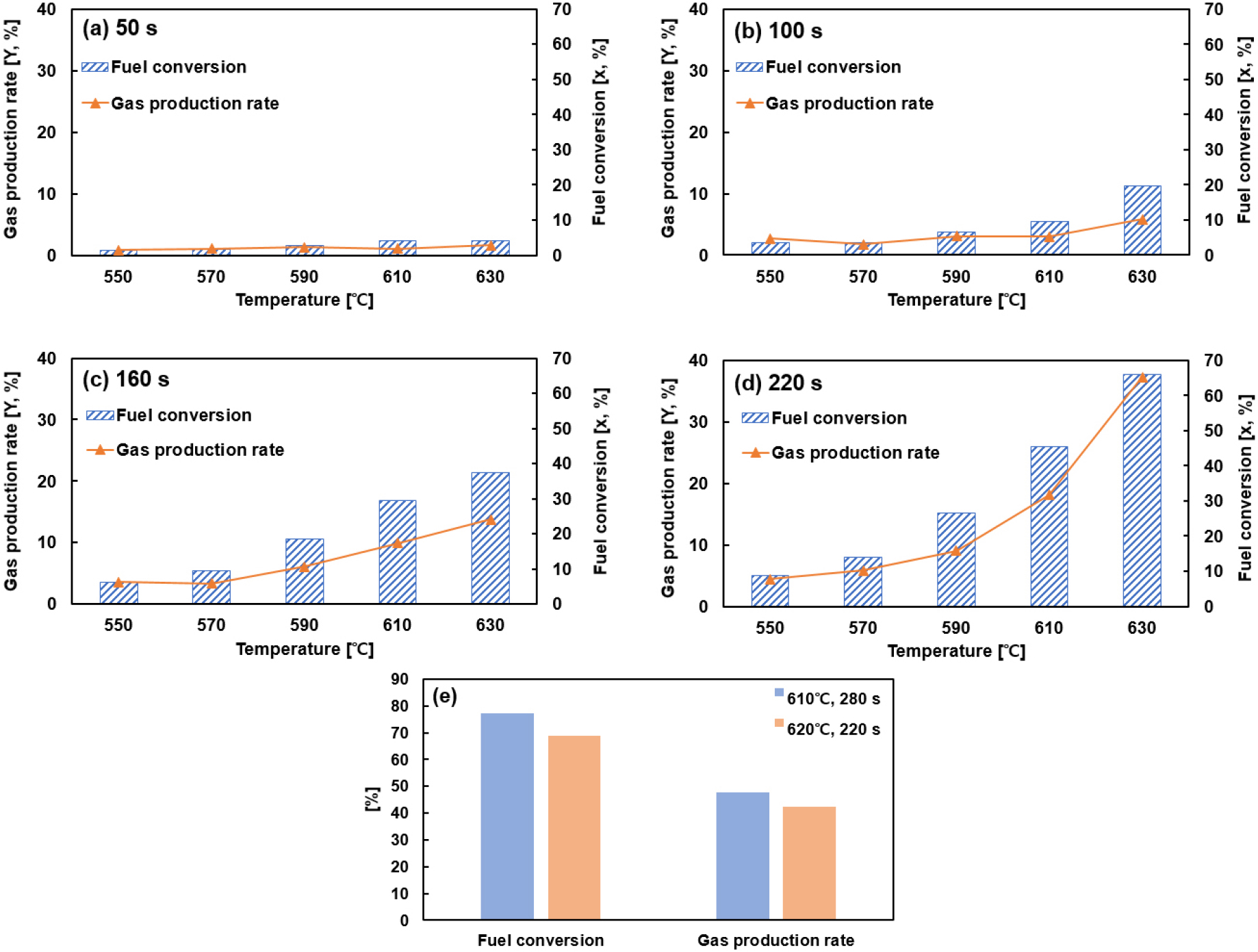
The fuel conversion rate and gas yield obtained from the pyrolysis experiments are shown in Fig. 4(a)-(e). Fig. 4(a) to (d) present the results of thermal cracking at temperature conditions ranging from 550°C to 630°C in 20°C increments, with reaction times of 50, 100, 160, and 220 seconds, respectively. Fig. 4(e) displays additional experimental results for conditions of 610°C for 280 seconds and 620°C for 220 seconds to obtain high-conversion data. As shown in the figures, under the 50-second reaction condition, pyrolysis did not proceed sufficiently, resulting in no distinct trends in fuel conversion rate and gas yield. However, for reaction times of 100 seconds or longer, both fuel conversion and gas yield showed an increasing trend as reaction temperature and time increased. In particular, under the 220-second reaction condition, the fuel conversion rate ranged from approximately 9% to 66%, and the gas yield ranged from about 4% to 37%, depending on the temperature. Additionally, across all reaction conditions, the fuel conversion rate varied from approximately 1% to a maximum of 77%, while the gas yield ranged from about 0.9% to a maximum of 48%.
3.2 Pyrolysis products
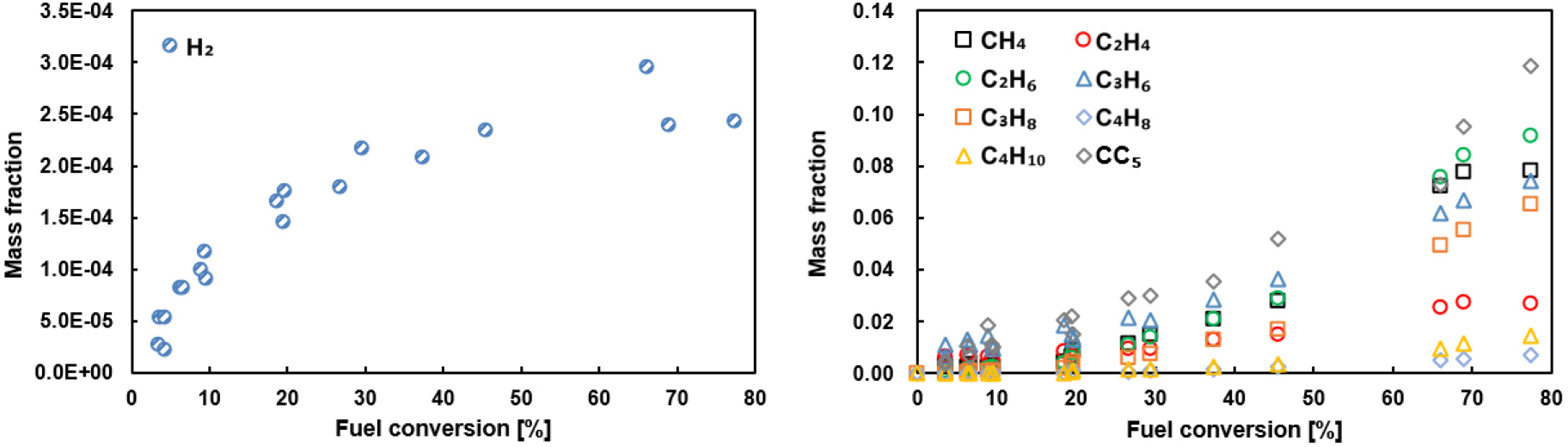
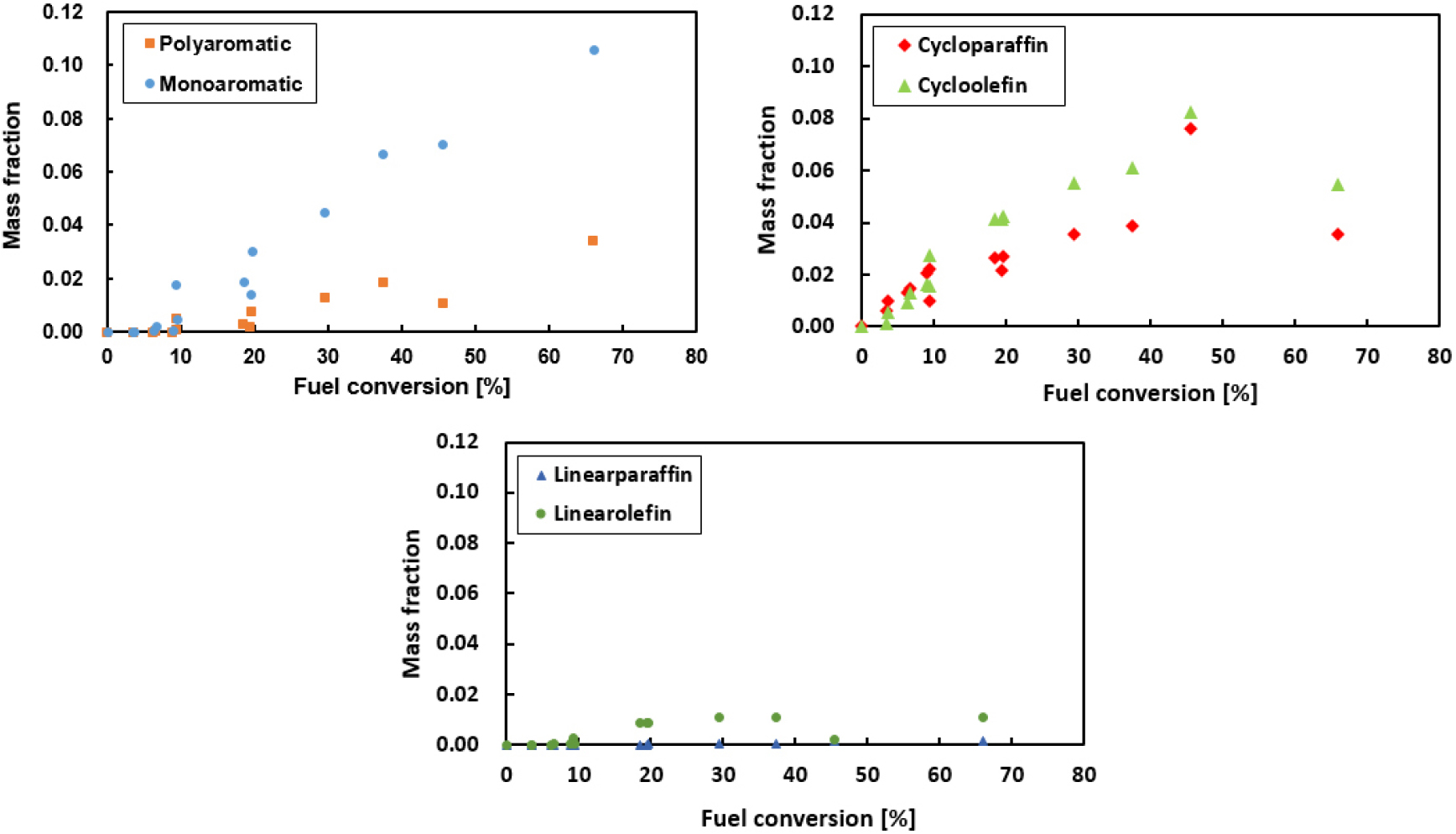
The gas products generated from the pyrolysis experiments of exo-THDCPD were analyzed, and the mass fraction distribution according to conversion was presented in Fig. 5. The identified gas components included H2, CH4, C2H4, C2H6, C3H6, C3H8, C4H8, C4H10, and a C5 compound presumed to be a cyclic species. Similar gas products were observed in an experimental study conducted by Cui et al. [25]. Furthermore, the mass fractions of all gas products showed an increasing trend as the conversion rate increased. Since this study aims to develop a global reaction PPD model based on representative products, gaseous products with four or more carbon atoms were categorized into representative compounds such as C4H8, C4H10, and cyclic C5(CC5) without distinguishing isomers. For liquid products, dozens of chemical species were detected at low conversion rates, while over 100 species were identified at high conversion rates. Due to this complexity, analyzing each species individually is practically challenging. Therefore, in this study, liquid products were classified into six types based on the molecular structure of the parent compound: polyaromatic, monoaromatic, cycloparaffin, cycloolefin, linearparaffin, and linearolefin. The mass fraction distribution according to conversion was presented in Fig. 6. Aromatic compounds were not formed at the early stages of the reaction but showed a gradual increase in mass fraction as conversion increased. In contrast, cyclic compounds were generated from the beginning of the reaction, and their mass fraction initially increased with conversion but later decreased at high conversion rates. This trend suggests that cyclic compounds undergo secondary decomposition at higher conversions, breaking down into smaller molecules or transforming into aromatic compounds. Meanwhile, linear compounds were produced in much smaller amounts compared to aromatic and cyclic compounds, with only a minor presence of olefin-type substances.
4. Development of Global Reaction Model
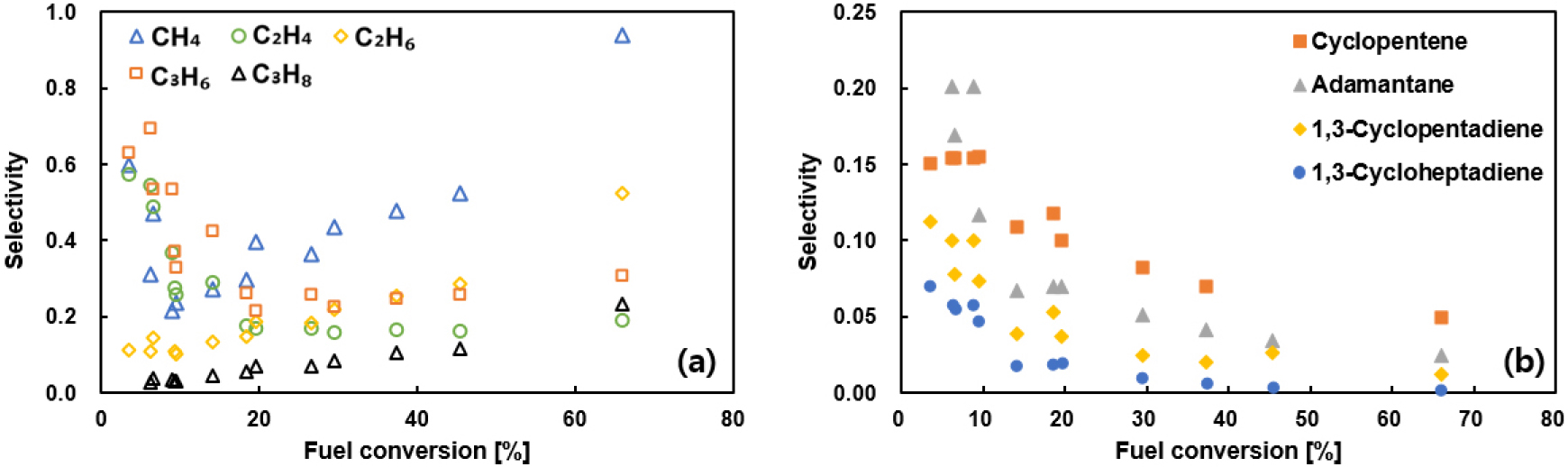
Various previous studies have reported global reaction models for alkane-based hydrocarbon compounds such as n-decane and n-dodecane, as well as kerosene-based blended fuels [4,14,26,27]. In general, the thermal decomposition of alkane-based hydrocarbon fuels can be appropriately represented by a global one-step reaction model that applies the proportional product distribution (PPD) assumption, which states that at low conversion rates, the products are formed in a fixed ratio [4,14,26]. Specifically, Ward et al. [14] reported that when the conversion rate is below 20%, the selectivity, which represents the ratio of the number of moles of a certain decomposed product per one mole of the original fuel, remains almost constant while deviations occur when the conversion exceeds 20%. This change is attributed to the occurrence of secondary decomposition reactions, where intermediate products from primary decomposition further break down into lower-molecular-weight compounds or aromatic substances, altering their selectivity [26,28]. In contrast, the cyclic hydrocarbon MCH (methylcyclohexane) exhibited a tendency for product selectivity to vary even at low conversions [29]. Similarly, in the pyrolysis experiments conducted in this study on the cyclic hydrocarbon exo-THDCPD, a similar trend was observed, as shown in Fig. 7, where product selectivity changed even at low conversion levels. Specifically, in the pyrolysis of MCH, the selectivity of CH4 among the gaseous products decreased up to a conversion of 10% and then began to increase, while C2H6 showed a continuous increase in selectivity as conversion increased [29]. A similar trend was observed in the results of the current study. Furthermore, as illustrated in Fig. 7, the selectivity of primary liquid products such as cyclopentene, adamantane, 1,3-cyclopentadiene, and 1,3-cycloheptadiene tends to decrease as conversion increases. Meanwhile, in gaseous products, the selectivity of alkane species increases, while that of alkene species decreases. In response, Hu et al. [29] introduced a new approach for developing a pyrolysis model for cyclic hydrocarbons, successfully constructing the model based on results at 10% conversion and thereby demonstrating the validity of such an approach. Given that PPD models are typically applied within a conversion range of up to 20%, selecting a representative point near the midpoint - such as 10% - is considered appropriate.
Building on these findings, this study proposes a global one-step reaction PPD model for exo-THDCPD that is applicable at low conversion rates, accepting the reduced accuracy due to selectivity variations. The pyrolysis reaction model was developed based on the selectivity data obtained from the experiment conducted at 610°C for 100 seconds, which resulted in a conversion rate of 9.4% (the closest point to 10%). Under these conditions, the detected gas products included H2, CH4, C2H4, C2H6, C3H6, and C3H8. For liquid products, GC-MS analysis identified over 70 peaks, of which 43 compounds were distinguishable. Considering each individual compound in the pyrolysis model would significantly increase computational costs and pose challenges in obtaining thermophysical properties for all compounds. Therefore, the identified liquid products were grouped based on similar properties. Ultimately, 43 types of the liquid products were classified into six representative compounds with molecular weights similar to the average molecular weight of each group. Aromatic compounds were divided into two groups: low molecular-weight compounds such as toluene and high molecular-weight compounds such as trimethylbenzene. Isomeric C10H16 compounds were collectively represented as C10H16*, while compounds including cyclopentane and cyclopentene were grouped as cyclopentane. Cyclic compounds containing two or more double bonds were categorized as methylcyclohexane, while other cyclic hydrocarbons were classified as ethylcyclohexane. Detailed data for each compound group is summarized in Table 4.
Table 4.
Classification of liquid products at 9.4% fuel conversion.
In the initial model, the carbon/hydrogen balance was 9.77/19.02 - lower in carbon and higher in hydrogen compared to the reactant, C10H16. This imbalance arose because the NIST SUPERTRAPP database lacked high molecular-weight alkenes (CnH2n) representative of the actual pyrolysis products, leading to the substitution of alkenes with alkanes (CnH2n+2), which resulted in a relative increase in hydrogen content. Additionally, the shortage of carbon was attributed to the exclusion of coke formation during the pyrolysis of exo-THDCPD. To address this, we referred to the previous study by Hu et al. [29], which successfully modeled the pyrolysis reaction by including C10 as a representative coke species. Following this approach, the final model included C10 to compensate for the carbon deficit, while maintaining the relative product ratios as much as possible and adjusting the hydrogen content to achieve a balanced carbon/hydrogen ratio. As a result, a global one-step reaction PPD model for exo-THDCPD, applicable within a conversion range of 20%, was ultimately developed, as shown in Eq. (4). Note that when the model is applied under higher conversion conditions, the accuracy of predictions for both the conversion rate and the distribution of decomposition products is expected to decrease considerably.
Meanwhile, the DGR (Differential Global Reaction) model proposed by Wang et al. [16] appears to be the only global thermal cracking reaction model for JP-10 published in the open literature. This model demonstrated high predictive performance by considering the stoichiometric coefficients of a total of 61 products as functions of pressure and conversion. However, it includes products such as 1,3-cyclopentadiene and cyclopentene, which are not found in the NIST SUPERTRAPP database, making it difficult to accurately obtain thermophysical properties for all products. In contrast, the model proposed in this study simplifies the reaction scheme by grouping numerous individual products into a few representative species that are included in the NIST SUPERTRAPP database. This approach not only simplifies the model but also facilitates the acquisition of product property data, thereby improving the computational efficiency of the model. By presenting this new model, selective application becomes possible through comparison with the existing model, and the results of this study are expected to be widely applicable in future research.
5. Numerical Simulation
5.1 Simulation setup
The geometry used in the calculations is a two-dimensional axisymmetric cylindrical tube, as shown in Fig. 8, and it was configured similarly to the mini-channel flow reactor experimental setup previously conducted by the authors’ research group for comparison with experimental results [30]. The inner and outer diameters of the channel were set to 2 mm and 3 mm, respectively, with a total length of 1,000 mm. Among this, the inlet and outlet regions of 100 mm each were designated as adiabatic sections, while the central 800 mm was a heated section where a constant heat flux was applied. A structured grid system was used to generate a total of 750,000 grid cells, with 10,000 and 75 cells distributed in the axial and radial directions, respectively, based on the authors’ previous study [28]. Numerical simulations were performed using ANSYS CFD 2022R2 Fluent, employing a pressure-based, steady RANS approach. The k-ε model with enhanced wall treatment was applied as the turbulence model [31]. The chemical reaction model utilized the finite-rate/eddy-dissipation model, and other numerical analysis methods were set in accordance with the previous study by Lee et al. [28]. The reaction kinetic parameters used in the calculations were set based on the previous study by Wang et al. [16], with the activation energy and pre-exponential factor set to 263 kJ/mol, 2.08 × 10¹⁵ s⁻¹, respectively. As summarized in Table 5, several previous studies have reported kinetic parameters for exo-THDCPD. Among them, the activation energy (Ea) and pre-exponential factor (A) proposed by Wang et al. [16], derived under experimental conditions of 4 MPa using a flow reactor, yielded CFD analysis results that most accurately replicated the experimental data. In addition, considering the comparison with the experimental results of Wang et al. [16], this study adopted their parameter values. Meanwhile, the thermophysical properties of reactants and products, such as density, constant pressure specific heat, viscosity, and thermal conductivity, were obtained by using NIST SUPERTRAPP. These properties were then fitted to polynomial curves to be applied in the calculations [28,32].
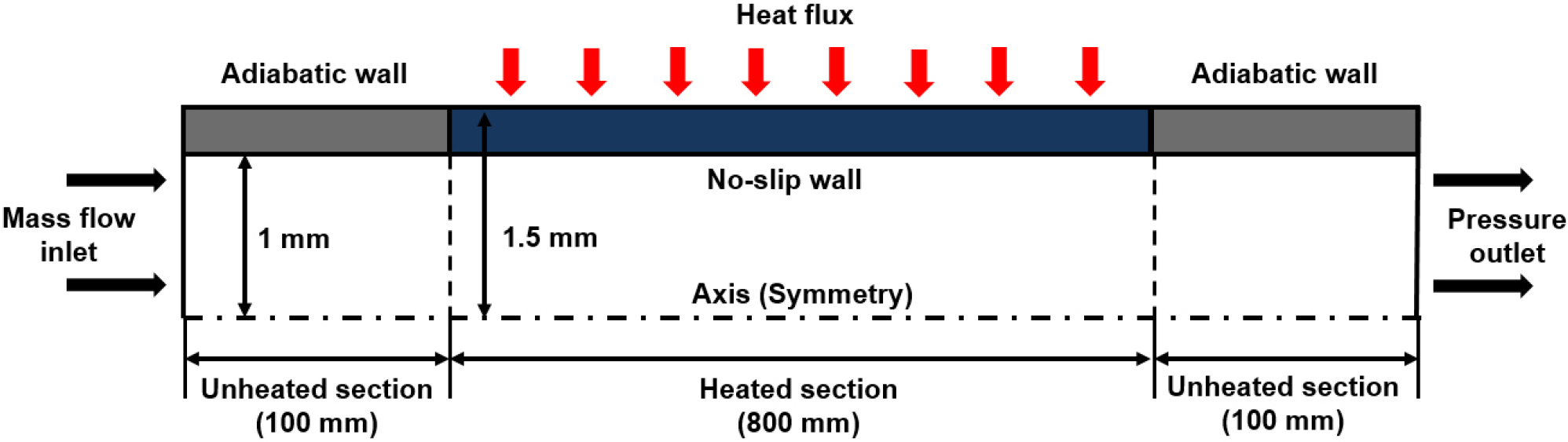
Table 5.
Kinetic parameters for pyrolysis of exo-THDCPD.
| A (1/s) | Ea (kJ/mol) | Pressure (MPa) | Reactor | References |
| 2.40e+13 | 255.3 | 0.1 | Flow | Rao and Kunzru [8] |
| 2.08e+15 | 268.0 | 3.5 | Flow | Wang et al. [16] |
| 2.08e+15 | 263.0 | 4 | Flow | Wang et al. [16] |
| 2.08e+15 | 264.0 | 5 | Flow | Wang et al. [16] |
| 2.29e+13 | 240.3 | 4 | Batch | Liu et al. [10] |
5.2 Results and discussion
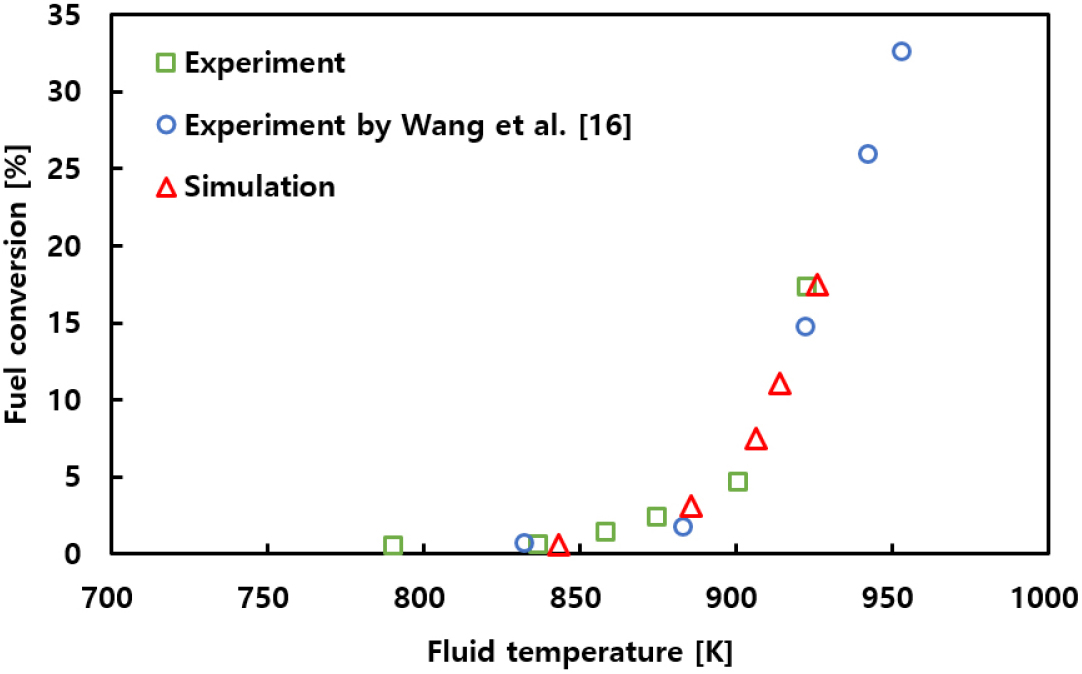
First of all, the numerical simulation results obtained using the thermal cracking PPD model were compared with experimental data to validate the global reaction model developed in this study. The data used for comparison included mini-channel flow experimental data conducted by the authors’ research group, featuring a 2 mm inner diameter and an 800 mm heated section, as well as flow reactor experiment data from Wang et al. [16], which involved a 2 mm inner diameter and a 900 mm heated section. In the experiments conducted by the authors’ research group, fuel was supplied at a flow rate of 1 g/s, and the net heat flux introduced to the wall was found to be in the range of approximately 200 kW/m2 to 280 kW/m2. On the other hand, in the experiments by Wang et al. [16], the fuel flow rate was 1.1 g/s, and although the applied heat flux was not explicitly stated, the conversion rate data based on the outlet fuel temperature provided by Wang et al. [16] were deemed sufficient for model validation. Accordingly, numerical simulations were performed under conditions of a 1 g/s fuel flow rate and a heat flux range of 200 kW/m2 to 280 kW/m2 for comparison with the experimental results. The boundary conditions used in the simulation, along with the experimental conditions, are summarized in Table 6.
Table 6.
Boundary and operating conditions used in simulation and experiments.
| Parameter | Simulation | Experiment | Experiment by Wang et al. [16] |
| Inlet fuel temperature | 300 K | 300 K | 353 K or 393 K |
| Pressure | 4 MPa | 4 MPa | 4 MPa |
| Mass flow rate | 1 g/s | 1 g/s | 1.1 g/s |
| Wall heat flux | 200-280 kW/m2 | 200-280 kW/m2 | - |
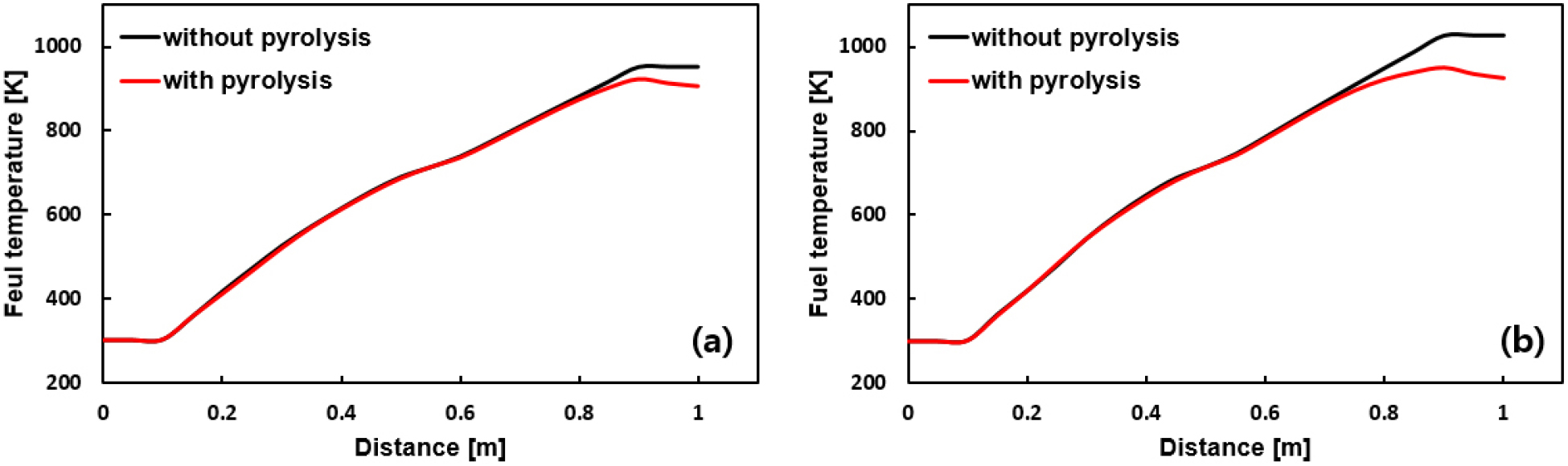
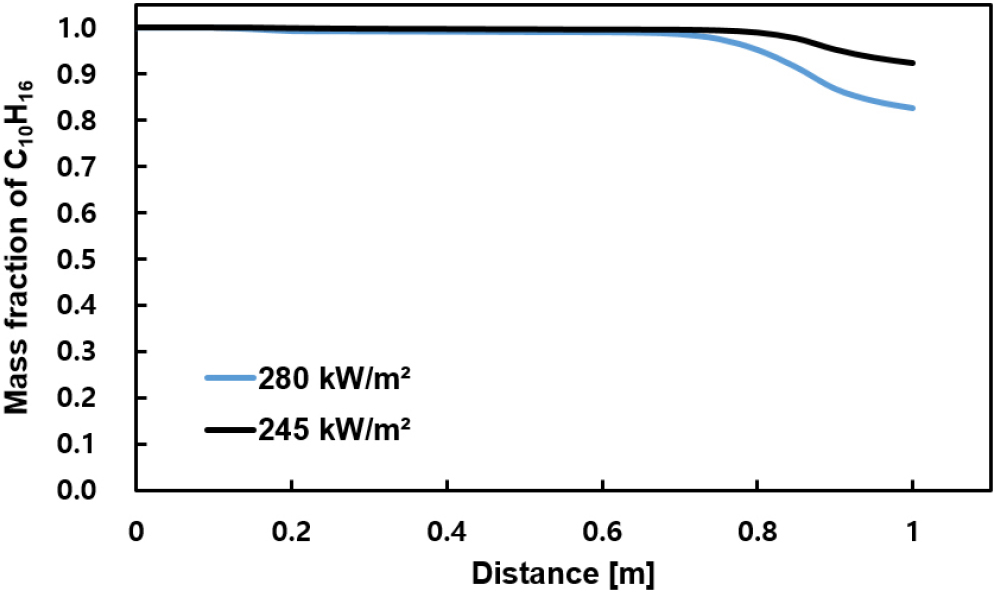
The results are presented in Fig. 9, which shows that the numerical results obtained using the pyrolysis model closely matched the experimental data, providing a preliminary validation of the PPD model of exo- THDCPD developed in this study. In addition, the developed model was used to analyze fuel temperature variations within the flow reactor, which are difficult to observe experimentally, depending on whether the pyrolysis was present or not. Specifically, Fig. 10 presents the analysis results for the conditions with the highest pyrolysis (heat flux of 280 kW/m2) and relatively lower pyrolysis (heat flux of 245 kW/m2). Under the heat flux condition of 245 kW/m2, pyrolysis began approximately 0.8 m from the inlet, leading to a decrease in fluid temperature due to the endothermic decomposition that followed. As a result, the outlet temperature was about 50 K lower compared to the case where pyrolysis was not considered. In contrast, under the heat flux condition of 280 kW/m2, the fluid temperature started to decrease at around 0.7 m from the inlet, and a temperature reduction of approximately 100 K was observed at the outlet. This trend was further confirmed by the results shown in Fig. 11, which illustrate the decrease in the mass fraction of exo-THDCPD beyond 0.8 m and 0.7 m from the inlet, respectively, where the decomposition reaction begins.
6. Conclusion
In this study, the thermal cracking characteristics of exo-THDCPD (C10H16), the main component of a representative high-density hydrocarbon aviation fuel JP-10, were analyzed using a batch reactor experimental test rig. The experiments were conducted under supercritical conditions, with the initial reaction pressure set to 40 bar and the reaction temperature maintained above 550°C. The results showed that the maximum fuel conversion rate and gas yield were approximately 77% and 48%, respectively. Additionally, the analysis of pyrolysis products identified hydrogen, methane, ethylene, ethane, propylene, and propane as the main gaseous products, all of which exhibited an increasing mass fraction with increasing conversion rates. In contrast, liquid products were found to consist of tens to over a hundred different compounds, which were classified based on their parent molecular structures. The analysis revealed that cyclic compounds were predominantly produced in the early stages of the reaction, while the production of aromatic compounds increased and that of cyclic compounds decreased as the conversion rate increased. Meanwhile, only a small amount of olefin compounds was detected among linear hydrocarbon substances, and paraffin compounds were barely found. Based on these experimental data, a global one-step reaction PPD model for exo-THDCPD was proposed. The numerical simulation results using this model showed good agreement with existing experimental data, validating its accuracy. Furthermore, the developed model was used to analyze the endothermic reaction behavior of the fuel inside the reactor as heat flux increased.
The findings of this study provide crucial insights into the thermal cracking characteristics of exo-THDCPD by offering data over a wide range of fuel conversion rates under supercritical conditions. Additionally, the PPD model for exo-THDCPD developed in this study can be effectively used to predict the flow and endothermic decomposition behavior of the fuel in regenerative cooling channels. The model proposed in this study is the first in-house pyrolysis reaction model for exo-THDCPD, applicable within a conversion range of 20%. The validity and accuracy of the model will be continuously verified and improved by comparing it with the experimental results obtained from the microchannel flow reactor system currently operated by the authors’ research group. Furthermore, to enable applicability at higher fuel conversion rates, the pyrolysis model should be implemented as a multi-step rather than a one-step reaction model [4,26], which will be addressed in future research. This study is expected to be highly useful for the design and analysis of regenerative cooling systems for hypersonic vehicles in the future.